
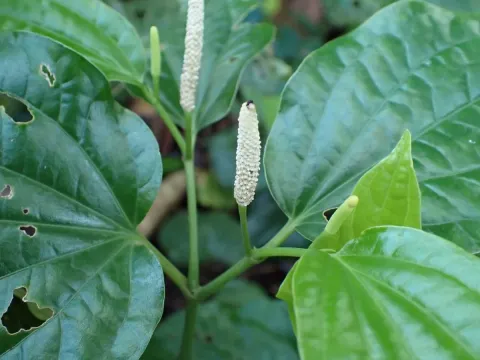
Piper sarmentosum
Piper sarmentosum
Propagation of Piper sarmentosum is primarily achieved through vegetative methods such as stem cuttings or division of existing root systems, as seeds often exhibit erratic germination.
What the section contains
Piper sarmentosum
Cuttings should be placed in a well-draining, moisture-retentive potting medium, maintaining a consistently high humidity level to encourage rapid root development.
The ideal time for planting is during the active growing season when temperatures are consistently warm, typically above 20 degrees Celsius.
Spacing should be managed to allow for the plant's natural creeping habit; planting individuals at intervals of 30 to 40 centimeters facilitates optimal canopy formation.
Initial establishment requires protection from direct sunlight, utilizing shade netting or natural canopy cover to prevent dehydration of the developing cuttings.
Piper sarmentosum, belonging to the Piperaceae family, is a perennial herbaceous plant native to the tropical and subtropical regions of Southeast Asia.
The plant thrives in fertile, loamy soils rich in organic matter and requires excellent drainage to prevent root rot, as it is sensitive to waterlogged conditions.
Temperature requirements are strictly tropical, necessitating a range of 20 to 30 degrees Celsius, making greenhouse cultivation essential in non-tropical zones.
Light levels should be moderate; the plant is naturally adapted to understory conditions and will experience leaf necrosis if exposed to excessive direct sunlight.
Proper agronomy involves frequent, light watering and the application of nitrogen-rich organic fertilizers to sustain the rapid production of succulent leaves.
Yield in Piper sarmentosum is measured by the total biomass of fresh, aromatic leaves produced, which are prized for both culinary and traditional medicinal uses.
Given its perennial nature and regenerative capacity, multiple harvests can be taken throughout the growing cycle, provided the plants are kept in good health.
Advanced agricultural practices, including high-density greenhouse hydroponics or soil-based systems, significantly increase the overall annual production.
The quality of the yield is determined by the leaf maturity; young, tender leaves possess the highest concentration of essential oils and the best texture for consumption.
Strategic pruning post-harvest encourages lateral growth, which is critical for maintaining high leaf production rates over an extended production period.
The primary agronomic threat to this culture is root rot, which is induced by poor drainage, excessive irrigation, or contaminated growing media.
Pests such as spider mites and aphids may become problematic in environments with low humidity or poor air circulation, necessitating consistent monitoring.
Integrated Pest Management (IPM) is highly recommended, prioritizing biological controls and natural predators over synthetic chemical applications on leaf crops.
Maintaining proper spacing and ensuring adequate ventilation between plants helps to reduce the incidence of fungal leaf spots and bacterial blights.
Early intervention through the removal of diseased plant tissue is vital to preventing the rapid spread of infections within a dense planting population.
Harvesting is performed manually to ensure only high-quality leaves are selected, thereby maintaining the market standard and preventing damage to the parent plant.
Best practices dictate harvesting during early morning or late afternoon to maximize the turgor pressure and aroma retention of the leaves.
Post-harvest handling requires immediate cooling or short-term cold storage, as the delicate foliage is highly susceptible to wilting and oxidation.
Drying for storage or processing should occur in a well-ventilated, shaded environment to preserve the chemical constituents and aromatic profile of the leaves.
The final product serves diverse markets, ranging from fresh culinary herbs used in traditional salads to processed extracts for the pharmaceutical and supplement industries.