
Porphyrophyllum pepper
Piper porphyrophyllum
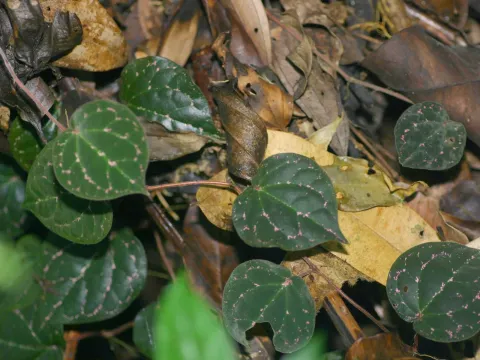
Piper porphyrophyllum is a stunning tropical vine species belonging to the Piperaceae family. Originating from the humid forests of Malaysia, this plant is highly prized by indoor plant enthusiasts for its heart-shaped, purple-hued leaves featuring a distinctive metallic sheen.
What the section contains
Porphyrophyllum pepper
This species is a climbing plant that utilizes adventitious roots to attach itself to supports, making it an excellent choice for vertical displays. Its native environment is the shaded understory of rainforests, where it receives indirect, filtered light throughout the day.
The cultivation of this pepper requires a precise environment, specifically focusing on high humidity levels and constant warmth. It thrives best in temperatures between 22°C and 28°C, and exposure to cold drafts should be avoided at all costs to prevent leaf drop and stem damage.
Regarding soil requirements, the substrate must be highly porous and well-draining, such as a mix of peat moss, pine bark, and perlite. A heavy, compacted soil will likely lead to root rot, which is the most common cause of failure in the cultivation of this sensitive species.
In terms of agricultural and horticultural use, Piper porphyrophyllum is strictly an ornamental plant. Unlike its culinary relatives in the Piper genus, this species is not used for spice production but rather serves as a decorative specimen for collectors of rare tropical foliage.
The primary threats to Piper porphyrophyllum include root and stem rot caused by Phytophthora or Pythium fungi. These pathogens proliferate in waterlogged soil, emphasizing the need for a strict watering schedule and excellent drainage management.
Pest management is equally critical; the plant is susceptible to spider mites and mealybugs, especially in indoor environments with low humidity. Regular leaf cleaning and the maintenance of a humid microclimate are the best cultural methods for preventing significant pest infestations.