
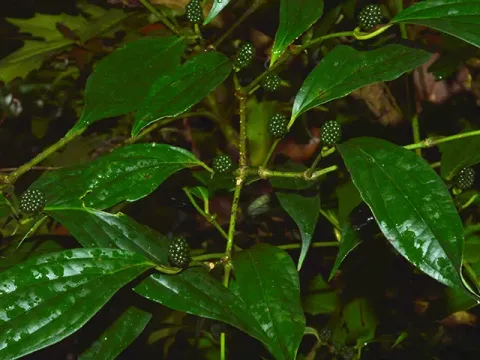
Piper mullesua
Piper mullesua
Piper mullesua is a perennial woody climber belonging to the family Piperaceae. Native to the mountainous regions of the Himalayas and parts of Southeast Asia, this plant thrives in subtropical ecosystems, functioning as an understory vine that utilizes surrounding vegetation for support.
What the section contains
Piper mullesua
The plant requires a stable, warm climate with high atmospheric humidity. It is particularly sensitive to cold temperatures and cannot withstand frost, which is a limiting factor for its cultivation in temperate zones, restricting it to tropical and greenhouse conditions.
Regarding soil requirements, Piper mullesua favors rich, well-drained soil with a high organic matter content. Ensuring adequate drainage is critical, as waterlogged conditions quickly lead to root rot and other physiological stressors that inhibit the growth of the vine.
Botanically, it is characterized by large, leathery leaves and a climbing growth habit. It grows best in partial shade, mimicking the filtered light of its natural forest habitat. When cultivated, it requires robust vertical structures to accommodate its rapid and vigorous growth pattern.
Its economic importance lies in the essential oils and piperine content found within its fruits and foliage. It has been used for centuries in local culinary practices and traditional medicinal applications due to its distinct pungent profile and biological properties.
The primary threats to Piper mullesua include various fungal pathogens such as leaf spot and root rot, which thrive in stagnant, humid environments. Maintaining optimal airflow within the plant canopy is the most effective management strategy to mitigate these risks.
Insect pests such as mealybugs, spider mites, and scale insects often target the sap of the plant, especially in controlled greenhouse environments. Regular inspection and the application of integrated pest management practices are essential to keep the populations of these pests under control.