
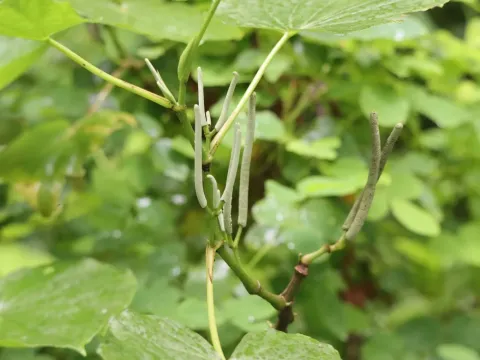
Piper umbellatum
Piper umbellatum
Piper umbellatum is propagated primarily through seeds or cuttings in tropical climate conditions. In regions with high humidity, sowing is carried out in prepared seed trays with a loose substrate rich in organic matter.
What the section contains
Piper umbellatum
The optimal time for sowing occurs at the start of the rainy season when air humidity levels reach their maximum. The seeds have relatively low germination rates when lacking warmth, so it is important to maintain temperatures between 25–28 degrees Celsius.
After the first true leaves emerge, seedlings are pricked into individual pots or transplanted to a permanent location in open soil. It is crucial to provide protection for young plants against direct midday sun and strong winds that may damage the large leaf plates.
In its natural habitat, the plant quickly occupies available space, so when cultivating, a distance of at least one meter between bushes must be maintained. Regular watering during the rooting stage is a critical factor for the successful development of the root system.
The vegetative process proceeds quite intensively, with the plant rapidly accumulating biomass. For industrial purposes, agronomists recommend periodic nitrogen fertilization to stimulate the growth of large leaves.
The crop has high requirements for soil and air humidity, preferring shaded or semi-shaded areas. Optimal growth is observed in tropical forest conditions where natural shading from taller trees is provided.
Soils must be well-drained but consistently moist, with a neutral or slightly acidic pH. The plant reacts extremely negatively to waterlogging in the root zone, which can lead to the development of rot.
The temperature regime must remain stably high throughout the year, as Piper umbellatum does not tolerate temperatures below 15 degrees Celsius. Even short-term frosts can be fatal for the aerial part of the bush.
Successful cultivation requires protection from direct sunlight, which causes burns on the broad, heart-shaped leaves. Providing artificial shading with nets is a mandatory requirement for open field farming.
Agricultural practices include mulching the root zone with organic materials to retain moisture. This simulates the natural forest floor necessary for the active development of the plant's surface root system.
The main pests for Piper umbellatum are small sucking insects, such as spider mites and various species of scale insects. They actively infest the underside of the leaves, leading to deformation and yellowing of the leaf plate.
Under high humidity conditions, the plant becomes vulnerable to fungal infections, such as powdery mildew or root rot. To combat pathogens, it is recommended to apply fungicides in a timely manner and monitor the ventilation of the plantings.
Nematodes can pose a serious threat to roots when the crop is grown in the same place for several years. Using cover crops and following crop rotation helps to significantly reduce the risk of soil-borne pathogen infestation.
Slugs and snails often damage young shoots by eating the tender tissues of the leaves at night. Installing mechanical barriers or using biological control agents is the preferred method of control in small areas.
An important element of prevention is regular sanitary pruning of diseased and dry leaves. This improves air circulation within the bush and reduces the concentration of fungal spores, preventing the mass spread of diseases.
Economic use is focused on harvesting leaves and roots, which are utilized in traditional medicine and cooking in tropical countries. The leaves are harvested by hand as they reach full maturity and size.
For medicinal purposes, the roots are harvested after the plant finishes its active flowering period. It is at this time that the concentration of biologically active compounds in the underground part reaches its maximum.
After harvesting, the plant material requires gentle drying in well-ventilated rooms at temperatures not exceeding 40 degrees Celsius. This preserves the essential oils and other beneficial compounds contained in the plant tissues.
Fresh leaves should be packed in containers with high humidity if intended for short-term storage or transport. Otherwise, they lose turgor quickly and become unsuitable for use.
The frequency of harvesting depends on the growth intensity of the specific specimen and the overall level of agricultural management. With proper care, a plantation can be exploited for several years until the natural depletion of the rhizomes occurs.