
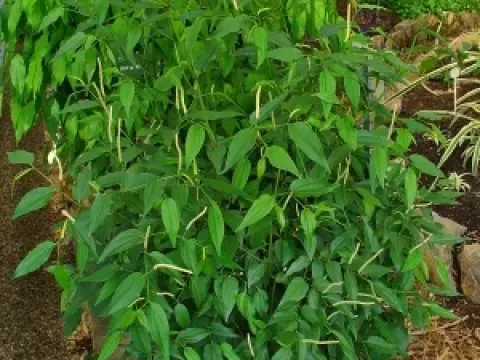
Piper nigrinodum
Piper nigrinodum
Propagation of Piper nigrinodum is typically performed via stem cuttings. This method allows for predictable growth and genetic uniformity, which is essential for uniform crop development in greenhouse environments.
What the section contains
Piper nigrinodum
For seed propagation, it is recommended to sow in early spring using a warm, humid substrate. Consistent bottom heat is vital to ensure optimal germination rates for this tropical species.
Transplanting should occur once the root system is well-established, usually after 8-10 weeks of nursery growth. Proper spacing is necessary to allow for the natural vining habit of the plant.
The substrate must be well-draining, consisting of a mix of peat, compost, and coarse sand. Aeration of the root zone is crucial for preventing physiological disorders in the early stages of growth.
Setting up a trellis system during the planting phase is essential, as the plant requires structural support to reach its full vegetative potential and ensure proper harvest access.
This crop thrives in tropical conditions with temperatures ranging between 22°C and 28°C. It is highly sensitive to cold, and any exposure to temperatures below 15°C will severely hamper metabolic activity.
Humidity is a critical environmental factor for Piper nigrinodum. Maintaining relative humidity levels above 70% is necessary to prevent leaf tip burn and ensure healthy foliage development.
The plant requires bright, filtered light. Exposure to intense, direct tropical sunlight can cause chlorophyll degradation and leaf scorching, necessitating the use of shade cloth in high-light environments.
Soil nutrient status should be managed carefully. Regular applications of organic matter, such as high-quality compost, help maintain the soil structure and nutrient availability required for vigorous growth.
Watering strategies must focus on consistency. The goal is to keep the growing medium moist but never waterlogged, as the roots are highly susceptible to oxygen deprivation in saturated soil.
Spider mites are the most prevalent pest for Piper nigrinodum, particularly in environments with low humidity. Regular monitoring and misting can help suppress mite populations effectively.
Scale insects can infest the stems, leading to stunted growth and secondary infections. Physical removal or the application of horticultural oils is recommended for effective control.
Root rot pathogens such as Phytophthora are significant risks when drainage is inadequate. Managing water supply and utilizing sterile growing media are primary preventive measures.
Foliar diseases, including various fungal leaf spots, may occur if air circulation is poor. Thinning the canopy and promoting ventilation are essential agronomic practices.
A strict integrated pest management (IPM) program should be implemented to minimize chemical reliance and preserve the ecological balance within the greenhouse.