
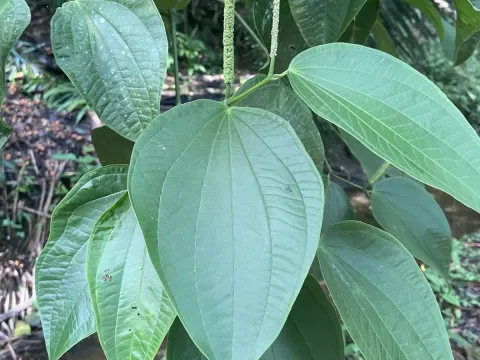
Piper reticulatum
Piper reticulatum
Piper reticulatum is a distinct perennial shrub belonging to the Piperaceae family, naturally occurring in the tropical rainforests of the Americas. It is highly valued for its large, intricately veined foliage and serves as a botanical subject of significant interest in tropical horticulture.
What the section contains
Piper reticulatum
The cultivation of this species requires strict adherence to tropical environmental conditions, specifically high humidity levels and consistent warmth. It thrives in ambient temperatures ranging from 22 to 28 degrees Celsius, and it does not tolerate cold drafts or temperatures below 12 degrees Celsius.
Soil requirements focus on high organic matter content, excellent drainage, and a slightly acidic pH level. A typical growing medium includes a mix of peat, bark, and perlite, which ensures proper aeration for the root system and prevents soil compaction over time.
Light management is essential, as the plant prefers bright, indirect sunlight to maintain its characteristic leaf patterns and structural integrity. Exposure to direct midday sun can result in leaf scorching, while insufficient light leads to spindly growth and reduced plant vigor.
Watering practices should be consistent, ensuring the substrate remains moist but never waterlogged. High air humidity is the most effective way to maintain leaf health, which can be achieved through regular misting or automated irrigation systems in greenhouse environments.
Common phytopathological issues include fungal infections such as root rot, which typically appear when the growing medium is kept too wet for extended periods. Improving airflow and practicing moderate irrigation are the primary methods for preventing these soil-borne pathogens.
Pest management is focused on controlling infestations of spider mites, thrips, and scale insects. These pests often exploit weak plants in low-humidity conditions, making biological controls and integrated pest management (IPM) strategies highly recommended for production.
Harvesting involves the selective collection of leaves for potential medicinal and industrial use, focusing on mature foliage that has fully developed its secondary metabolite profile. Each leaf is carefully inspected for quality before being prepared for the drying process.
The post-harvest phase requires rapid dehydration under controlled conditions to preserve the integrity of essential oils and other active compounds. Proper airflow and stable temperatures during drying are critical to ensuring the commercial value of the harvested plant material.