
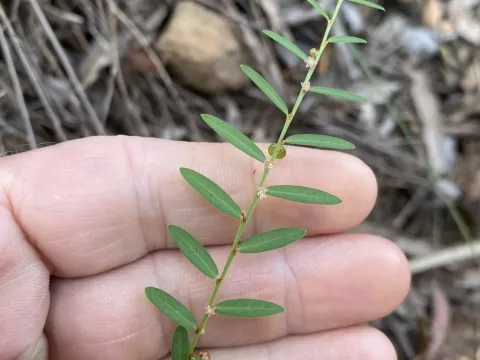
Phyllanthus virgatus
Phyllanthus virgatus
Phyllanthus virgatus is a member of the Phyllanthaceae family, known for its slender, wand-like branches and medicinal properties. The plant typically exhibits an upright growth habit.
What the section contains
Phyllanthus virgatus
Originally native to tropical regions of Asia and Australia, this species thrives in warm, humid conditions. It is highly sensitive to cold and requires greenhouse protection in non-tropical climates.
Soil requirements focus on well-draining, slightly acidic substrates. It is essential to prevent waterlogging, as the root system is highly susceptible to rot under saturated conditions.
The plant requires consistent moisture and high humidity levels during its peak growth phase. Providing balanced fertilization with a focus on nitrogen and potassium is recommended for optimal yield.
Agricultural management includes regular spacing to ensure adequate air circulation around the plants, which helps maintain plant vigor and prevents the buildup of micro-pathogens.
Root rot is the most significant threat to Phyllanthus virgatus, primarily caused by excessive irrigation or poor drainage in the potting or field medium.
Spider mites represent a major pest risk, especially in low-humidity indoor or greenhouse environments, leading to leaf yellowing and reduced photosynthetic capacity.
Powdery mildew can frequently affect the leaves during periods of stagnant air, necessitating the use of improved ventilation systems within the cultivation area.
Aphids may occasionally colonize the soft tissue of developing tips, which requires monitoring and timely intervention using organic horticultural soaps.
Implementing a strict sanitation program, including the removal of dead foliage, is crucial to minimize the survival of pest larvae and fungal spores between growing cycles.