
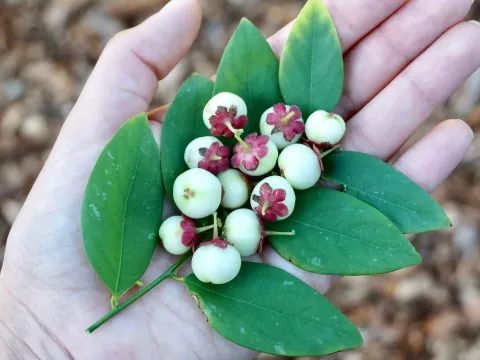
Sauropus
Sauropus
Propagation of sauropus is most commonly achieved through cuttings, as growing from seed requires specific conditions for germination. Cuttings are taken from semi-hardwood shoots approximately 15–20 centimeters long.
What the section contains

Sauropus
The optimal time for planting cuttings in soil or containers is during periods of high humidity and stable warm temperatures. In tropical climates, planting can be done almost year-round.
When planting in open ground, a spacing of at least 50–70 centimeters between plants must be maintained. This ensures proper air circulation and prevents excessive competition for nutrients.
Young plants require shading for the first few weeks after transplanting. Gradual adaptation to intense sunlight helps in developing a strong root system and a healthy canopy.
The soil should be rich in organic matter, so it is recommended to add compost or well-rotted manure before planting. The plant responds well to slightly acidic to neutral substrates with good drainage.
Sauropus is a tropical perennial shrub belonging to the Phyllanthaceae family, also known as sweet leaf or star gooseberry. It is native to Southeast Asia and India.
The crop is highly sensitive to cold and cannot tolerate freezing temperatures. The optimal temperature range for active growth is between 22 and 30 degrees Celsius.
The plant requires regular and deep watering, as it is sensitive to drying out. However, water stagnation in the root zone can lead to root rot and other fungal diseases.
For vigorous growth of green mass, sauropus prefers locations with dappled sunlight. Direct midday sun can cause scorching of the tender young leaves.
In temperate regions, sauropus is cultivated as a container plant or in greenhouse conditions. An important factor for success is maintaining high atmospheric humidity.
The yield of sauropus depends on the intensity of pruning. Regular trimming stimulates the growth of new side shoots, which are the main harvestable product.
Leaves and young shoot tips are harvested as they grow. Commercial use typically involves multiple harvests throughout the growing season.
Under favorable conditions, a bush can provide several kilograms of marketable greens per square meter annually. The high nutritional value of the leaves makes it a promising crop.
Proper care, including nitrogen fertilizer application, helps maintain stable yields over several years of plantation operation.
Experienced agronomists recommend conducting a rejuvenating prune every two years. This prevents the lower part of the shrub from becoming woody and stimulates a new growth cycle.
Sauropus is relatively resistant to diseases, but it can be affected by fungal infections under conditions of excessive humidity, such as leaf spot.
Among insect pests, spider mites and aphids pose the greatest threat. They colonize the undersides of leaves, sap the plant's energy, and stunt its development.
To control pests on a commercial scale, biological control methods are preferred. Chemical pesticides are limited due to the regular harvesting of edible leaves.
Poor airflow around the bush can lead to the spread of powdery mildew. Prevention involves following correct planting patterns and timely thinning of the canopy.
Root systems may suffer from nematodes when grown in infested open soils. Crop rotation is the most effective preventative measure for soil-borne threats.
Harvesting is carried out manually by cutting off the apical parts of the shoots, 10–15 centimeters in length. This procedure serves both as harvesting and pruning/shaping the bush.
Sauropus leaves are rich in vitamins and protein, so it is recommended to cool them down quickly after harvest to maintain freshness and prevent wilting.
In cooking, both fresh and cooked leaves are used. The product is popular in Asian cuisine due to its distinct flavor, which is often compared to garden peas.
The harvested produce does not store well at room temperature. It is recommended to sell or process the greens within 24 hours of harvesting.
To extend shelf life, use perforated polymer packaging and store in refrigerated units at temperatures between 4 and 6 degrees Celsius.