
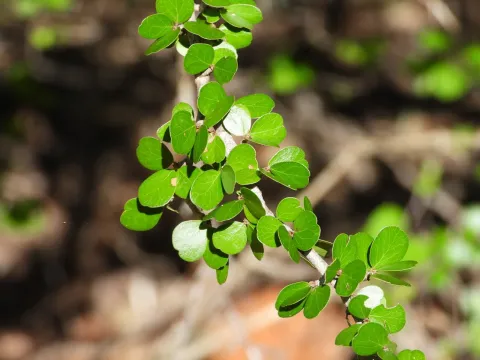
Securinega suffruticosa
Securinega
Propagation of Securinega suffruticosa is primarily carried out through seeds, as this method ensures the cultivation of more viable planting stock. Seeds should be sown in the autumn season as part of a pre-winter routine, as they require mandatory stratification to germinate successfully in the spring.
What the section contains

Securinega suffruticosa
In nursery conditions, spring sowing is also possible; however, seeds must be pre-stratified in a refrigerator or under snow for 2–3 months. The sowing depth in the soil should not exceed 1–2 centimeters to ensure optimal warming and sufficient oxygen access.
For vegetative propagation, woody cuttings are used, which are planted in prepared cold frames at the end of spring. Cuttings allow for the preservation of desirable varietal traits, which is crucial for maintaining plantations with high alkaloid content.
The planting density of the shrub on commercial plantations is regulated to ensure ease of maintenance and mechanized harvesting of green mass. Typically, row spacing is kept at about 1.5–2 meters to allow free access for agricultural machinery.
After mass germination, plants require regular thinning to avoid overcrowding, which can lead to the development of fungal diseases in the lower parts of the shrub.
Securinega belongs to the Phyllanthaceae family and is a light-loving plant that prefers open areas with good sunlight exposure. In shaded locations, the synthesis of biologically active substances, particularly the alkaloid securinine, is significantly reduced.
The crop is quite demanding regarding soil conditions: it develops best in light, fertile loamy soils with a neutral or slightly acidic pH. Waterlogged areas with high groundwater levels are categorically unsuitable for this plant.
The plant has moderate frost resistance, but in regions with harsh winters, it requires protection or hilling of the root system. The optimal temperature range for active growth is 20–25 degrees Celsius.
Moisture availability is a critical factor in the first year of the plant's life when the root system is not yet fully developed. In later years, Securinega shows signs of moderate drought resistance, though it requires regular irrigation to achieve high biomass yields.
The crop responds positively to the application of organic and mineral fertilizers, especially during the phase of active vegetative growth. Nitrogen supplementation promotes leaf mass development, which serves as the primary raw material for the pharmaceutical industry.
The yield of Securinega directly depends on the age of the plantation, agronomic care, and planting density. Harvesting of green mass begins in the second or third year of the shrub's life once it achieves a sufficient crown volume.
The highest concentration of active compounds is observed in young, non-woody shoots and leaves. The optimal frequency for harvesting raw materials is one to two times per growing season to ensure the bush can recover.
The average yield of dry raw material per hectare varies depending on the cultivation region and the intensity of the farming technologies. When all agronomic standards are met, production levels can reach significant volumes demanded by the pharmaceutical industry.
A key factor in productivity is proper pruning. Conducting rejuvenation pruning every few years stimulates the growth of new shoots, which possess the highest alkaloid content.
To preserve crop quality, the harvested material must be dried quickly at temperatures not exceeding 50 degrees Celsius. Violating the drying temperature regime leads to the degradation of active components and reduces the biological value of the product.
Securinega suffruticosa exhibits relative resistance to most pests, which simplifies plantation management. However, under unfavorable weather conditions, the plants may become susceptible to specific phytopathogens.
The most common diseases are fungal infections, such as powdery mildew or leaf spots, which occur due to excessive humidity and dense planting. Prevention consists of ensuring good airflow within the shrubs and following strict crop rotation practices.
As for pests, sucking insects like aphids or spider mites may appear on the plantation, feeding on the juice of young leaves. Affected plants show stunted growth and a loss of marketability.
In the event of a severe pest outbreak, the use of biological control agents is recommended, as strong chemical insecticides are highly undesirable for medicinal crops intended for pharmaceutical use.
Regular phytosanitary monitoring of the plantation allows for the early detection of infection hotspots and halts the spread of diseases. Removing affected plant parts is a mandatory procedure to prevent epidemics within the crop.
Harvesting is performed during the period of maximum accumulation of the alkaloid securinine in the plant tissues. This period usually coincides with the budding phase and the beginning of flowering when the biochemical composition of the shoots is best balanced.
Harvesting technology involves cutting the herbaceous tops of shoots up to 20–30 centimeters in length. The use of mechanized mowers can significantly accelerate the process, although manual harvesting guarantees higher quality selection of raw materials.
After cutting, the green mass must be sent for drying immediately, as delays lead to self-heating processes and the spoilage of alkaloids. Traditionally, the raw material is spread in thin layers under shelters or in drying facilities.
Properly dried material retains its characteristic color and aroma, preserving its medicinal properties for a long period. Storage must be in dry, well-ventilated rooms in paper bags or other breathable packaging.
After harvesting, plantations often require additional care, such as loosening the soil between rows and applying fertilizers, which allows the plant to recover before entering the dormant period and storing nutrients for the next spring.