
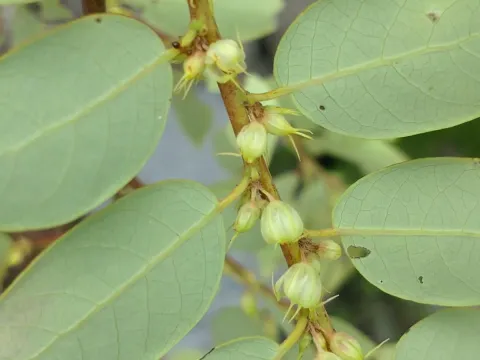
Phyllanthus mirabilis
Phyllanthus mirabilis
Propagation of Phyllanthus mirabilis is primarily achieved through seeds, which must be sown in a warm and humid environment to ensure successful germination.
What the section contains
Phyllanthus mirabilis
The substrate for sowing should be highly porous, consisting of pumice, perlite, and a small amount of organic peat to maintain necessary moisture levels.
Spring is the ideal season for sowing, as the increasing light levels help the seedlings establish a healthy, thickened caudex early in their growth cycle.
Seedlings should be kept in a greenhouse or propagation chamber with controlled temperatures between 25 and 30 degrees Celsius until they are fully acclimated.
Patience is required, as the initial growth phase of the plant is slow, and the characteristic swollen stem takes time to develop its full form.
Phyllanthus mirabilis belongs to the Phyllanthaceae family and is native to the rocky and forested landscapes of Southeast Asia, specifically Thailand and Laos.
This plant is renowned for its attractive caudex, a thickened, bulbous stem that acts as a water storage organ, allowing it to survive in seasonal climates.
In terms of light, the plant prefers bright, filtered sunlight; it is sensitive to intense, direct afternoon sun which may bleach its delicate foliage.
The growing medium must be fast-draining, similar to that used for succulents, to prevent water from accumulating around the root zone and caudex base.
Temperature management is critical: the plant thrives in warm conditions and should be protected from temperatures below 15 degrees Celsius to prevent dormancy damage.
The primary concern for growers is root and stem rot caused by improper watering, particularly during the dormant period when water needs are significantly reduced.
Common pests include spider mites, which thrive in low-humidity environments, and mealybugs that often hide in the crevices of the caudex and leaf axils.
Integrated pest management using neem oil or systemic insecticides is recommended to control populations without damaging the plant's sensitive tissues.
Fungal infections can occur if the plant is kept in stagnant, humid air, making good ventilation a necessity for long-term health and growth.
Regular monitoring of the stem for soft spots is essential for early detection of potential disease outbreaks, allowing for timely surgical removal of affected areas.