
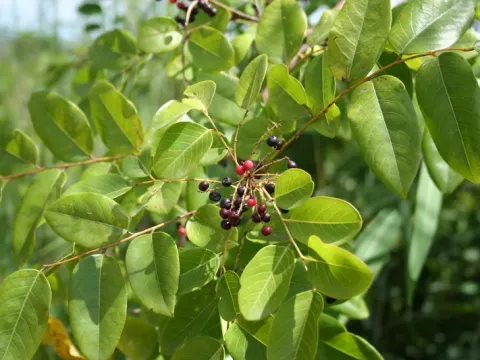
Phyllanthus muellerianus
Phyllanthus muellerianus
Phyllanthus muellerianus is a perennial shrub or small tree belonging to the Phyllanthaceae family. Native to tropical Africa, this species is typically found in humid forests, gallery forests along riverbanks, and secondary vegetation zones.
What the section contains
Phyllanthus muellerianus
The cultivation of this species requires a tropical climate with high ambient temperatures throughout the year. It lacks cold tolerance, meaning it must be grown in regions where frosts are non-existent and seasonal temperature fluctuations are relatively low.
Optimal soil conditions for this crop involve well-draining, nutrient-rich substrates. While the plant can adapt to various soil types, it thrives best in slightly acidic to neutral soils that retain sufficient moisture without becoming waterlogged.
Environmental light intensity is a critical factor for the growth of Phyllanthus muellerianus. The plant prefers shaded or semi-shaded environments, as intense, direct sunlight can cause leaf scorching and impede the photosynthetic efficiency of juvenile plants.
Water management is essential, particularly during the active growing season. The plant requires consistent moisture levels in the soil to support its biomass production, although soil aeration must be maintained to prevent the development of root pathogens.
The economic value of Phyllanthus muellerianus is primarily derived from its traditional medicinal applications. Different parts of the plant, including leaves, bark, and roots, are harvested for their therapeutic compounds used in local health systems.
Bark harvesting is conducted by selecting mature stems. Agronomists emphasize that sustainable extraction techniques must be utilized to ensure the long-term viability of the population, avoiding over-harvesting that could kill the individual plant.
Leaf collection takes place throughout the year depending on the vegetative state of the plant. The foliage is harvested by hand, ensuring that only healthy and undamaged leaves are collected to maintain high quality for subsequent processing and drying.
Root harvesting is a more invasive process usually performed on a rotational basis. The roots are carefully excavated, cleaned, and dried under shade to preserve the integrity of the secondary metabolites found within the tissues.
Post-harvest management involves careful drying and storage. Keeping the harvested material in dry, well-ventilated conditions is paramount to prevent microbial degradation and to ensure the chemical stability of the plant's active pharmaceutical components.