
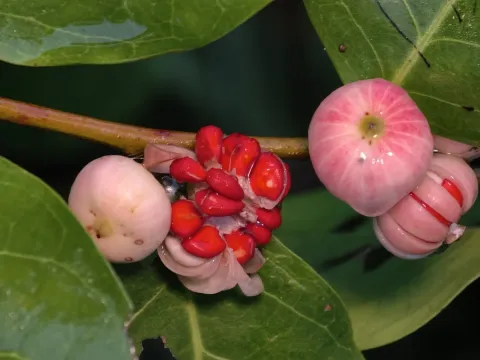
Phyllanthus littoralis
Phyllanthus littoralis
Phyllanthus littoralis is a member of the Phyllanthaceae family, characterized by its specialized adaptation to coastal and saline-prone environments. As a tropical crop, it thrives in regions with consistently high humidity and warm temperatures throughout the year.
What the section contains
Phyllanthus littoralis
The plant requires well-drained, sandy soils that allow for rapid drainage while maintaining sufficient organic matter for root development. In agricultural practice, maintaining a soil pH between 6.0 and 7.0 is crucial for optimal nutrient uptake and biomass accumulation.
Climate conditions are the most critical factor for successful production. The crop is strictly frost-intolerant and requires full exposure to solar radiation to ensure the secondary metabolites, for which the plant is primarily harvested, are produced in sufficient quantities.
The morphology of Phyllanthus littoralis is distinct, featuring slender stems and small leaves arranged in a pinnate manner. This structure is an evolutionary adaptation that helps the plant minimize water loss while maximizing photosynthetic activity in intense tropical sunlight.
In terms of economic value, this species is cultivated mainly for the extraction of pharmaceutical compounds. Its biological profile, rich in tannins and flavonoids, makes it a valuable crop for the herbal medicine industry, requiring specialized post-harvest drying techniques to preserve the active ingredients.