
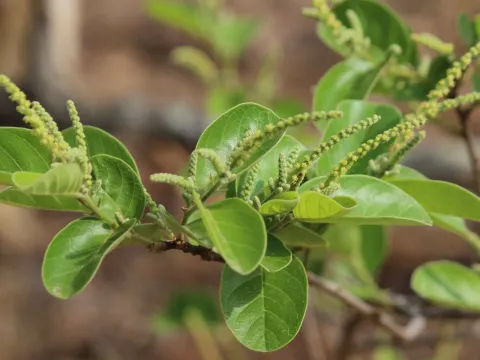
Antidesma ghaesembilla
Antidesma ghaesembilla
Antidesma ghaesembilla is a species of flowering plant belonging to the Phyllanthaceae family. This tropical shrub or small tree is native to a broad range of regions, spanning from India and Southeast Asia to Northern Australia.
What the section contains
Antidesma ghaesembilla
The plant thrives in a variety of soil types, including sandy, clay, and rocky substrates, provided they offer good drainage. It is highly versatile in terms of light exposure, growing successfully in both full sun and semi-shaded forest environments.
Climatic requirements are centered around the tropical and subtropical zones, where consistent temperatures and seasonal rainfall support active growth. While hardy, the plant prefers areas sheltered from extreme temperatures, particularly frost, which can severely impact young tissue.
Botanically, it is known for its alternating, elliptic leaves and small, inconspicuous flowers borne on axillary or terminal racemes. The fruits are drupes that change color as they ripen, transitioning from pale green to red, and eventually turning dark purple or black.
Commercially and locally, the fruit is widely harvested for fresh consumption or processing into various preserves, jams, and traditional beverages. The foliage and bark are sometimes utilized in traditional medicine practices in its native range.
Harvesting is typically done manually, as the berries ripen unevenly within the clusters. Careful handling is necessary to maintain fruit integrity, and gatherers often collect only the fully darkened berries to ensure the best sweetness and quality for processing.
Although generally robust, the plant can be susceptible to leaf-eating insects and, in poorly managed agricultural settings, fungal infections during the humid rainy season. Monitoring for pest activity during the early vegetative stage is essential for plant vigor.