
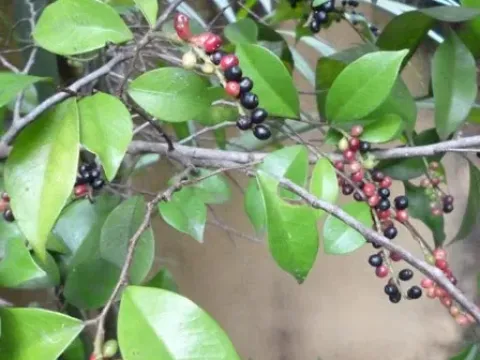
Antidesma alexiteria
Antidesma alexiteria
Antidesma alexiteria is a tropical evergreen tree belonging to the Phyllanthaceae family. Known for its dense foliage, it is typically found in the tropical regions of India and Sri Lanka, thriving in warm and humid environments.
What the section contains
Antidesma alexiteria
The plant requires a high-temperature climate throughout the year and is highly sensitive to frost. It grows best in areas with well-distributed rainfall, avoiding regions prone to extreme aridity.
Soil requirements for Antidesma alexiteria include deep, well-draining, and nutrient-rich earth. While the species is somewhat adaptable, it performs significantly better in slightly acidic soil conditions.
Agrotechnical management involves maintaining appropriate spacing between trees to ensure adequate airflow and sunlight penetration. Regular weeding around the base of the plant is necessary to prevent competition for nutrients.
Propagation is primarily done through seeds, though vegetative methods can be employed in specialized nursery settings to ensure the uniformity of high-yielding cultivars.
The primary agricultural interest in Antidesma alexiteria lies in its fruit, which are small drupes produced in clusters. These fruits serve as a food source and have a tangy flavor profile suitable for various culinary applications.
In addition to food use, parts of the plant, including leaves and bark, have been historically employed in traditional medicinal practices. The species is valued for its potential properties as an herbal remedy.
The harvesting process requires careful handling as the fruits are delicate and prone to bruising. Selective picking is necessary, as fruit clusters often do not mature all at once.
Post-harvest management involves sorting and cleaning the fruits before market distribution. Due to their perishability, they are often processed into jams or syrups shortly after harvest.
The cultivation of this species contributes to local biodiversity and offers small-scale economic value to communities practicing tropical forest gardening or traditional agroforestry.