
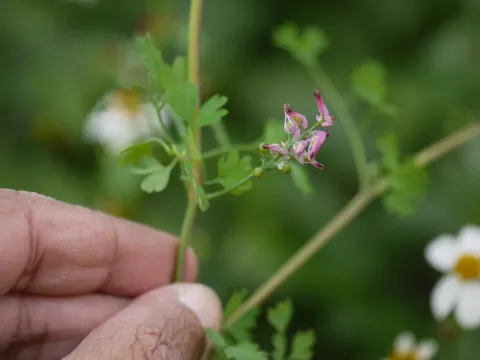
Indian fumitory
Fumaria indica
Indian fumitory (Fumaria indica) is an annual herbaceous plant belonging to the Papaveraceae family. It is increasingly recognized in industrial agriculture as a significant source of secondary metabolites used in medical applications.
What the section contains
Indian fumitory
The plant originates from South Asia and the Himalayan regions, thriving in diverse environments from plains to mountainous zones. Its distribution is currently expanding as it gains interest for sustainable cultivation in Mediterranean and temperate climates.
Regarding cultivation requirements, Fumaria indica demands well-drained, porous soils. It performs best in sandy loam with neutral pH levels, as it is highly sensitive to waterlogging, which often leads to root decay and decreased alkaloid concentration.
Climatic factors such as high light intensity and moderate temperature ranges are essential for optimal growth. The plant requires a stable thermal regime during its active growth phase to ensure uniform development and high quality of the harvested aerial parts.
Its primary economic role is within the pharmaceutical and nutraceutical sectors. The plant is extensively studied for its hepatoprotective and antioxidant properties, making it a valuable crop for small to medium-scale herbal farm operations.
The main pathological threats include fungal infections such as powdery mildew, which thrive in conditions of high humidity and poor air circulation within the field. Maintaining proper row spacing is crucial to reduce the risk of such outbreaks.
Pest pressures are typically attributed to sap-sucking insects like aphids. Infestations can cause significant stunting of the plants and may facilitate the transmission of viral diseases, which significantly reduces the harvestable yield and quality of the raw herbal material.