
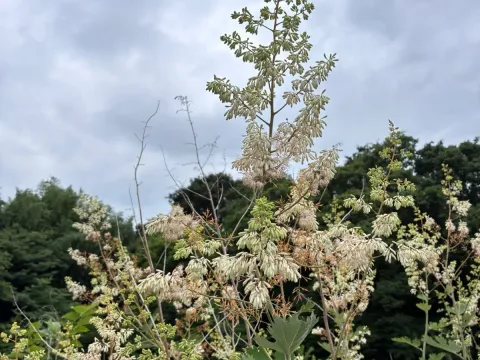
Macleaya
Macleaya R. Br.
Macleaya is most commonly propagated vegetatively by dividing rhizomes in early spring or autumn, as seed propagation often suffers from low germination rates. When using seeds, they are typically sown before winter or after cold stratification to overcome dormancy.
What the section contains

Macleaya
The optimal time for dividing the plants is at the start of sap flow in March or April, or after the growing season concludes in October. The segments should be planted in prepared trenches, maintaining a spacing of 50–70 centimeters to ensure adequate space for root expansion.
Seed planting depth should be shallow, around 0.5 to 1 centimeter, to allow necessary light exposure for germination. After sowing, the soil should be lightly compacted to ensure firm contact between the seeds and the growing medium.
During the first year, the plant focuses on establishing its extensive root system, making consistent irrigation essential immediately after planting. Early growth stages require diligent weeding, as Macleaya is sensitive to competition from aggressive weeds during its establishment phase.
For commercial production, a seedling-based approach is often preferred, with 40–50-day-old plants transferred to the field once the threat of frost has passed. This technique ensures a uniform stand and higher biomass production in the initial growing year.
Macleaya is a perennial member of the Papaveraceae family, highly valued for its concentration of isoquinoline alkaloids, particularly sanguinarine and chelerythrine. It thrives in sunny locations but demonstrates tolerance to partial shade conditions.
The crop requires fertile, loose, and well-drained loamy soils with a neutral or slightly acidic pH. Waterlogging must be strictly avoided, as excess moisture in the root zone significantly increases the risk of rot and disease.
In regions with harsh winters, Macleaya requires protection to prevent rhizome damage during extreme cold. Mulching with straw or peat is an effective strategy to insulate the root buds and maintain stable soil temperatures throughout the dormant season.
The plant responds well to organic and mineral fertilization, especially nitrogen inputs during the peak vegetative growth phase. A split-application method, dividing fertilizer doses between early spring and the bud formation stage, is recommended for optimal results.
Although it possesses some drought tolerance, regular irrigation is vital for biomass production, especially during dry spells. Inadequate moisture can cause premature leaf yellowing and negatively impact the synthesis of the plant's valuable medicinal compounds.
The primary harvest product is the aerial part (herb), which is collected at full bloom when alkaloid concentration reaches its maximum potential. The annual yield depends heavily on the age of the plantation and the quality of the agricultural management practices.
Starting from the second year, the plant produces vigorous stems reaching heights of 2–2.5 meters, facilitating mechanized harvesting. With proper care, the yield of dried herb can range from 3 to 5 tons per hectare in established fields.
Intensive farming systems may allow for two cuts per growing season, provided there is sufficient soil moisture and nutrient replacement after the first harvest. It is crucial to maintain a stubble height of at least 10–15 centimeters to ensure winter survival and regrowth.
Product quality is strictly defined by the total alkaloid content, which must meet pharmacopoeial standards for medicinal extraction. Drying processes must be carefully managed, keeping temperatures below 50 degrees Celsius to preserve the chemical integrity of the harvest.
Plantations typically remain productive for 5–7 years before renewal becomes necessary. Over time, natural soil depletion and a decrease in rhizome vigor suggest that relocating the crop or performing deep soil amendment is required for long-term viability.
While Macleaya is generally robust, improper agricultural practices can lead to disease and pest outbreaks. Powdery mildew is the most common fungal issue, characterized by a visible white coating on the leaves during humid conditions.
Waterlogged soil can lead to Fusarium wilt, which causes root browning and systemic plant death. Proactive fungicide applications during high-humidity periods are recommended to mitigate the risk of fungal spread across the plantation.
Aphids and spider mites are the primary pests, feeding on sap from young leaves and stems. Their populations tend to explode during hot, dry periods, necessitating vigilant monitoring and timely intervention by the agronomist.
Root pests, such as wireworms and white grubs, pose a serious threat to new plantations, particularly when fields are converted from virgin land. Seed treatment and soil preparation before planting are essential steps in managing underground pest populations.
Integrated pest management (IPM) is crucial, focusing on crop rotation, debris removal, and the judicious use of biological controls or registered pesticides to minimize ecological impact while maintaining crop health.
Harvesting takes place during the mass flowering phase, as this is when the plant's biological activity is at its zenith. This timing is critical for the efficiency of the subsequent extraction process and the overall purity of the alkaloids.
For large-scale harvesting, forage harvesters or mowers with shredders are used to streamline the process and simplify transport to drying facilities. Contamination with soil must be strictly avoided as it diminishes quality and creates processing challenges.
Collected biomass should be moved to the drying facility within 2–4 hours of cutting to prevent self-heating and enzymatic degradation of the alkaloids. Spreading the material in thin, ventilated layers ensures consistent moisture reduction.
Drying is performed in climate-controlled facilities with forced-air circulation or large, well-ventilated barns. Once moisture levels drop to 12–14 percent, the material is milled, baled, and stored in moisture-proof containers for delivery to manufacturers.
Field maintenance post-harvest includes the removal of residue and light discing to discourage pathogen overwintering. Applying a final round of fertilizer post-harvest helps the plant store energy in the rhizomes to prepare for the dormant winter period.