
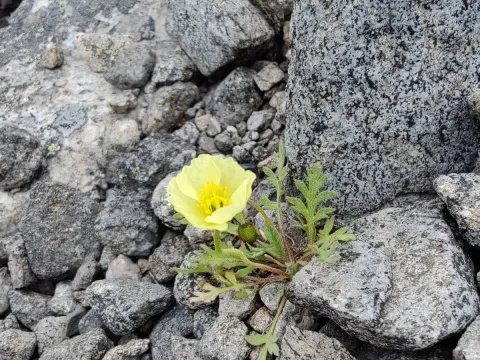
Lapland poppy
Papaver lapponicum
The Lapland poppy (Papaver lapponicum) is a perennial herbaceous species belonging to the Papaveraceae family. It is an arctic specialist, naturally occurring in northern regions where it has adapted to short growing seasons and harsh, frigid environments.
What the section contains
Lapland poppy
Morphologically, the plant is characterized by a basal rosette of pinnatifid leaves that are densely pubescent. This hairiness is a crucial adaptation that provides insulation and reduces transpiration in the dry, windy conditions of the arctic tundra.
Cultivation of this species is highly demanding and requires specialized conditions. It thrives in well-drained, nutrient-poor, gravelly or rocky soils that mimic the natural screes and riverbanks where it is typically found in the wild.
The most critical requirement for the Lapland poppy is excellent drainage; standing water or waterlogged soils are lethal to the root system. Furthermore, it requires full sun exposure and is intolerant of competition from taller, more vigorous plant species.
Its primary use is in the niche market of rock gardening and botanical research. Due to its specific ecological needs and cold hardiness, it serves as an excellent model organism for studying plant physiological adaptations to extreme northern climates.