
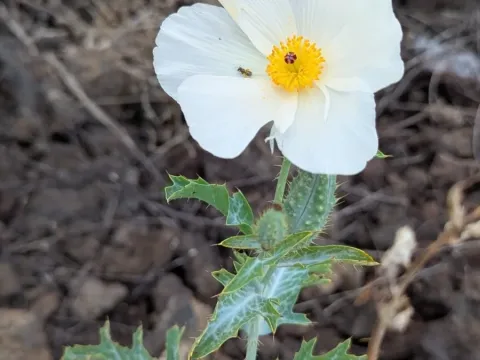
Glaucous prickly poppy
Argemone glauca
The Glaucous prickly poppy (Argemone glauca) is a perennial herbaceous plant belonging to the Papaveraceae family. Naturally, this species is endemic to the Hawaiian Islands, where it thrives on arid slopes and open field landscapes.
What the section contains
Glaucous prickly poppy
The plant features distinct glaucous leaves with prickly edges and produces a yellowish latex when the stems or foliage are damaged. The flowers of the culture are large and bright yellow, providing both high ornamental appeal and traditional therapeutic value.
This crop has high light requirements, favoring direct sunlight and areas protected from strong winds. For successful development, the plant needs intense photosynthesis, which is supported by high levels of solar radiation.
Regarding soil conditions, the plant is quite demanding; it prefers well-drained, loose substrates with moderate fertility. Heavy clay soils prone to waterlogging are strictly unsuitable, as they cause root rot and fungal infections.
Optimal temperature conditions for active growth range from 20 to 28 degrees Celsius. While the plant shows moderate drought tolerance, prolonged water deficit during the flowering phase can significantly decrease its overall vegetative biomass.
The primary threats to this crop include sap-sucking pests, such as aphids and spider mites, which can infest young shoots. In conditions of high air humidity, the leaves are prone to developing fungal diseases, including powdery mildew.