
Golden eardrops
Ehrendorferia chrysantha
Description
Growing requirements
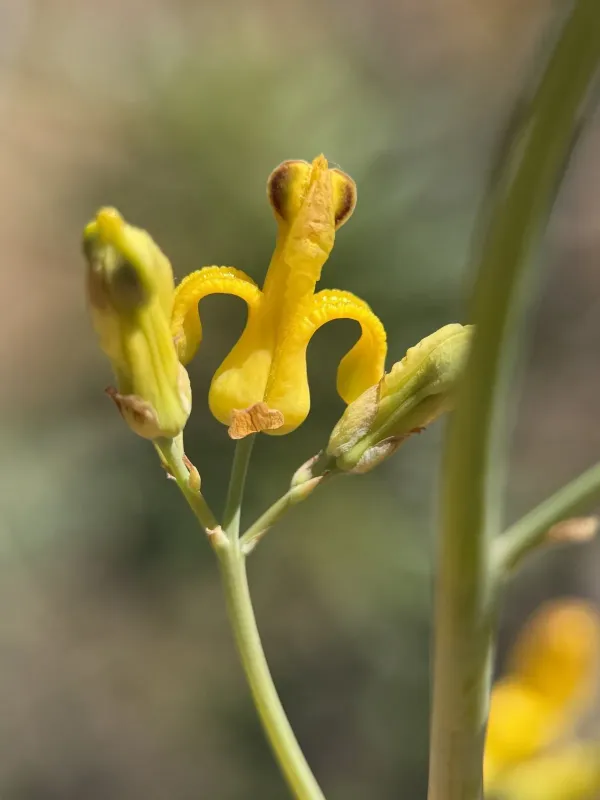
Golden Eardrops (Ehrendorferia chrysantha) is a notable perennial herb belonging to the Papaveraceae family. It is native to the mountain regions of California, where it naturally colonizes sites affected by wildfires.
The cultivation of this plant requires specific soil conditions, primarily focusing on excellent drainage. It thrives in gritty or rocky soils where moisture does not accumulate, mimicking its natural habitat.
Botanically, it is distinguished by its golden-yellow, drooping flowers and glaucous, fern-like foliage. These characteristics contribute to its status as a sought-after species for specialty gardens and arid landscaping.
Agronomic management involves providing full sun exposure and avoiding excessive fertilizers. As an ornamental crop, it displays remarkable resilience to heat and occasional dry spells throughout the growing season.
While primarily an ornamental species, it holds significant value for biodiversity projects aimed at restoring local plant communities in its native range.
Main diseases and pests
Root rot caused by poor soil drainage and waterlogging is the most significant threat to the survival of Golden Eardrops.
Aphids can infest the plant during the early growth stages, potentially leading to stunted development and reduced flower quality.
Powdery mildew is a common fungal threat when air circulation is poor or when humidity levels remain consistently high.
Small mammals and burrowing rodents may cause physical damage to the root system, often resulting in the loss of individual plants.
Environmental stress, such as extreme moisture coupled with cold temperatures, typically triggers fungal complications, making site selection crucial.