
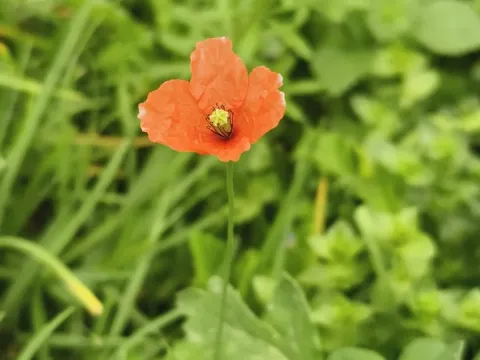
Long-headed poppy
Papaver dubium
The long-headed poppy is an annual herbaceous plant belonging to the Papaveraceae family, commonly found as a weed in agricultural landscapes.
What the section contains
Long-headed poppy
Seed germination typically occurs in early spring or autumn, depending on the climatic zone and soil moisture levels available for the seedlings.
Agronomic management focuses on preventing the establishment of these plants, as they emerge rapidly and compete with primary crops for soil nutrients.
Cultivation practices involving deep soil inversion can bury seeds too deep for emergence, effectively reducing the population in subsequent seasons.
Early emergence gives this species a competitive advantage, necessitating timely herbicide applications or mechanical harrowing during the crop seedling stage.
This species thrives in well-drained, nutrient-rich soils, often favoring calcareous or sandy-loam environments common in temperate regions.
It requires significant solar radiation to reach maturity, making open field conditions ideal for its vegetative and reproductive success.
The long-headed poppy demonstrates a moderate tolerance to soil acidity but prefers neutral pH levels for optimal development of its taproot system.
Water availability is crucial during the early stages of development, though the mature plant can withstand transient drought conditions.
Proper field drainage is essential to prevent waterlogging, which the species finds detrimental to its overall root health and canopy development.
The long-headed poppy serves as a potential host for various fungal pathogens, which can threaten adjacent cash crops if not properly managed.
Powdery mildew represents the most frequent threat, especially in dense populations where air circulation is poor and humidity levels remain high.
Aphids are the primary insect pests that colonize the plant, leading to stunted growth and damage to the floral parts during the flowering season.
Root-knot nematodes can also be a significant issue, as they proliferate in the rhizosphere of the poppy and persist in the soil for several years.
Preventive measures include strict sanitation of farm machinery to avoid seed dispersal and the implementation of diverse crop rotation cycles.