
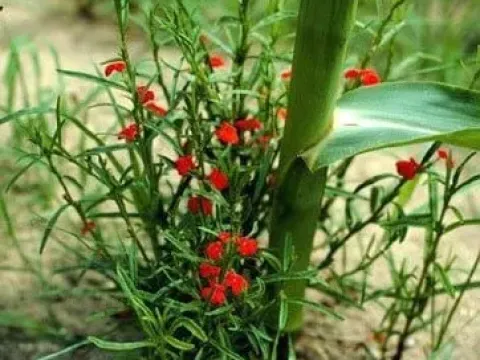
Witchweed
Striga lutea
Witchweed (Striga lutea, also classified as Striga asiatica) is a notorious parasitic angiosperm belonging to the family Orobanchaceae. It is recognized globally as one of the most significant biological threats to cereal crop production in tropical and subtropical regions.
What the section contains
Witchweed
The plant originated in Africa and has since spread to various parts of Asia and the United States. Its primary hosts include staple food crops such as maize, sorghum, millet, rice, and sugarcane, which form the base of the economy for many agrarian nations.
Botanically, Striga is a hemiparasite, meaning it possesses chlorophyll but depends on a host plant for water and essential minerals. It utilizes specialized structures called haustoria to invade the root tissues of host plants, creating a physiological link that siphons off vital resources.
Regarding climate and soil requirements, this plant thrives in warm, sun-drenched environments with well-drained, sandy soils. It is particularly invasive in degraded soils with low nitrogen levels, where it easily outcompetes struggling host crops for nutrients.
Agricultural management is intensive and focuses on exhausting the soil seed bank. Farmers often employ trap crops, such as soybeans or cotton, which induce the germination of witchweed seeds without providing the necessary host link, causing the parasite seedlings to die shortly after emergence.
The primary threat posed by Striga is its ability to cause severe crop failure. The damage occurs predominantly underground before the parasitic plant is even visible, leading to stunted growth, leaf chlorosis, and total plant collapse in cases of heavy infestation.
Witchweed is highly resilient due to its unique seed dormancy mechanism. Seeds remain viable in the soil for over a decade, waiting for germination stimuli in the form of specific chemical exudates (strigolactones) released by host roots.
Pests and diseases that naturally affect Striga are currently being researched for biological control, including various species of fungi like Fusarium. However, there are no widespread commercial biocontrol agents that can completely neutralize the threat in field conditions.
Human activity is a major driver of Striga spread. The movement of farm machinery, tools, and contaminated crop seeds acts as a vector for dispersal, making the implementation of strict quarantine measures and field sanitation protocols essential for containment.
Economic impact is devastating, often resulting in losses exceeding 50% of the harvest. Ongoing research into host resistance and chemical inhibitors that block the parasitic connection remains the most promising path for reducing the witchweed's impact on global food security.