
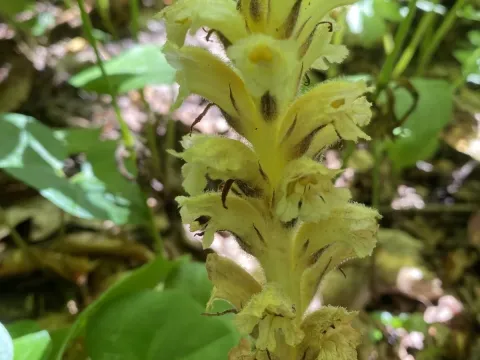
Yellow broomrape
Orobanche flava
Yellow broomrape (Orobanche flava) is a holoparasitic plant species belonging to the Orobanchaceae family. It is distinct in its lack of chlorophyll, relying entirely on host plants for its nutritional requirements.
What the section contains
Yellow broomrape
The plant attaches to the host's root system via haustoria, specialized structures that penetrate the vascular tissue. This process allows the parasite to siphon off water and vital nutrients, often causing severe stress to the host.
The species is primarily found in mountain ranges and humid zones of Central and Southern Europe. Unlike some other broomrape species that target industrial crops, Orobanche flava is frequently associated with specific hosts like Petasites.
Botanically, it features a yellowish, fleshy stem and dense inflorescences. The seeds are minute and dust-like, enabling them to remain dormant in the soil for extended periods until stimulated by host root exudates.
Ecologically, it requires moist soils and proximity to its preferred host plants. It does not possess traditional agrotechnical requirements because it is not a cultivated crop but a wild parasitic weed.
The primary threat posed by Orobanche flava is the depletion of host resources, which reduces the vigor and yield potential of the infected vegetation.
Managing this parasite requires integrated approaches including soil solarization and the use of trap crops that trigger germination without supporting the attachment of the parasite.
Manual removal of broomrape spikes before the capsule stages is the most effective cultural method to prevent long-term soil seed bank buildup.
Chemical control remains difficult because of the biological link between the parasite and the host, making selective herbicides often ineffective or harmful to the host plant.
Regular monitoring of areas with high biodiversity is crucial to prevent the spread of the parasite into sensitive ecological zones where it could impact native plant populations.