
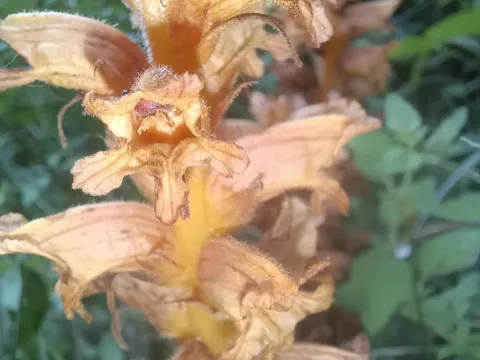
Wormwood broomrape
Orobanche lucorum
Wormwood broomrape (Orobanche lucorum) is an obligate parasitic plant belonging to the Orobanchaceae family. Being holoparasitic, it lacks chlorophyll and relies entirely on host plants for nutrients.
What the section contains
Wormwood broomrape
The primary host for this species is wormwood (Artemisia). The broomrape establishes a connection with the host's vascular system through specialized structures known as haustoria.
The geographic distribution of this species spans across Europe and Asia, primarily in habitats where its host plants naturally occur, such as grasslands and arid hillsides.
Environmental requirements focus on well-drained soils and high sunlight exposure, which are essential for the maturation of the parasite's flowering stalks after they emerge from the ground.
Its biology is fascinating due to the seed germination process, which is triggered by chemical exudates released from the host roots, ensuring the parasite only germinates near a suitable food source.
The most significant natural threat to this parasitic plant is the fly Phytomyza orobanchia, which acts as a biological control agent by feeding on the developing seeds within the capsules.
Fungal infections, particularly those caused by Fusarium species, often affect the stalks of the broomrape, leading to decay and reducing the viability of the plant before reproduction.
Agrotechnical management includes the manual uprooting of the broomrape stalks before the seeds ripen to prevent the dispersal of thousands of microscopic seeds into the soil.
Crop rotation is a standard practice to manage infestation levels, ensuring that host densities are lowered sufficiently to break the life cycle of the parasite.
Integrated pest management strategies are crucial to limit the spread of Orobanche lucorum, combining mechanical removal with potential biological antagonists to ensure long-term control.