
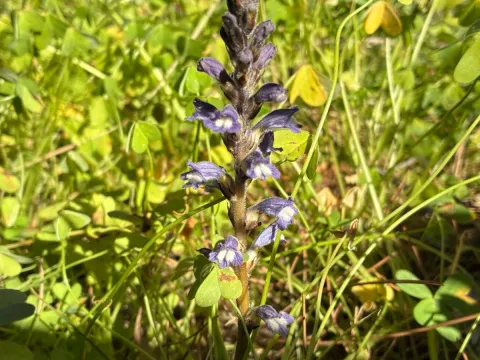
Broomrape
Phelipanche
Broomrape (Phelipanche) is a genus of parasitic plants in the Orobanchaceae family. As an obligate root parasite, it completely lacks chlorophyll and must attach itself to a host plant's root system to obtain water, minerals, and carbon compounds for survival.
What the section contains
Broomrape
The life cycle begins with seed germination, which is triggered exclusively by chemical exudates (strigolactones) released from the roots of host plants. Without these signals, the seeds can remain dormant in the soil for over a decade.
The plant thrives in warm, dry climates. Optimal soil temperatures for germination and the successful development of haustoria, the specialized organs used for host attachment, are typically between +20°C and +25°C.
Soil type influences the infestation severity. Sandy or well-aerated soils facilitate the movement of chemical triggers from host roots, increasing the chances of successful parasite attachment during the early growth stages of the crop.
Agronomic management is essential for long-term control. This includes deep plowing to bury seeds, crop rotation with non-host species, and the use of trap crops that trigger germination without allowing the parasite to attach.
Broomrape poses a significant threat to global agriculture, particularly for sunflower, tobacco, and tomato crops. By diverting nutrients from the host, it causes stunting, wilting, and substantial yield losses that can lead to complete field failure.
Genetic resistance is the primary defense strategy. Plant breeders continuously develop new crop varieties carrying resistance genes against different races of Phelipanche to keep pace with the parasite's rapid adaptation.
Chemical control involving herbicide-tolerant crops has revolutionized the management of broomrape in sunflower fields. Targeted application of specific systemic herbicides kills the parasite during its emergence phase.
Integrated Pest Management (IPM) incorporates biological control agents, such as specific insects and fungi, which can reduce the vigor of the weed by damaging its reproductive structures and reducing seed bank levels.
Strict phytosanitary measures are critical, as the tiny seeds are easily spread through contaminated agricultural machinery, wind, and irrigation water, leading to the establishment of the parasite in previously unaffected regions.