
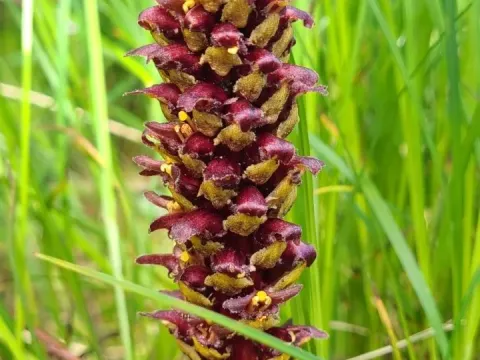
Boschniakia
Boschniakia
Boschniakia is a genus of parasitic plants belonging to the Orobanchaceae family. These plants are holoparasitic, meaning they lack chlorophyll and are entirely dependent on host plants for their survival and development.
What the section contains


Boschniakia
The life cycle of this genus is intrinsically linked to specific host plants, typically woody species like alder. The parasite attaches to the host's roots via haustoria, a specialized structure that allows the extraction of nutrients and water from the host's vascular system.
The native distribution area of Boschniakia covers temperate and cool regions across the Northern Hemisphere. They thrive in forest environments where the density of host root systems is sufficient to support their biological needs.
Ecological requirements include high levels of soil moisture and shading. As non-photosynthetic organisms, they do not require sunlight for energy production, preferring the dim and humid microclimate of forest floors.
In agricultural practice, Boschniakia is not considered a crop but rather a biological curiosity or, in some cases, a stressor for woody plant populations. Managing such species requires understanding the underlying host-parasite relationship.
Fungal infections pose the most significant threat to the fleshy stems of Boschniakia, especially during periods of excessive rainfall. These pathogens can cause rapid degradation of the plant's structural integrity.
Insect herbivory is a natural limiting factor for the population. Specific insect species have evolved to feed on the reproductive parts of these plants, which directly affects the success of their seed dispersal.
Changes in local climate, particularly soil drying, can prove fatal to the parasite if the host plant experiences stress or mortality due to environmental changes.
Habitat fragmentation remains a primary concern for the long-term sustainability of Boschniakia populations. As forests are altered, the intricate symbiotic connections are frequently disrupted.
Lack of specialized defenses against invasive pathogens makes these plants particularly vulnerable when their forest environment is disturbed by human activities.