
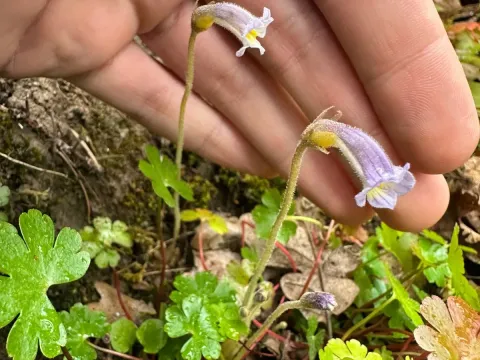
One-flowered broomrape
Orobanche uniflora
The one-flowered broomrape (Orobanche uniflora) is a unique achlorophyllous parasitic plant belonging to the Orobanchaceae family.
What the section contains
One-flowered broomrape
Unlike agricultural crops, this species does not perform photosynthesis and relies entirely on a host plant for its supply of water and nutrients.
The native range of this plant is primarily in North America, where it prefers moist habitats, woodlands, and areas with suitable host species available.
Its botanical structure is highly reduced, consisting mostly of underground tubers and short stalks that produce solitary flowers rising above the soil surface.
Growth is entirely dependent on chemical signals released by the host roots, which act as a germination trigger for the tiny seeds of the broomrape.
The broomrape acts as a biological stressor for its host plants by extracting essential nutrients through specialized attachments known as haustoria.
Host plants typically include species within the Saxifragaceae and Asteraceae families, where the parasite can weaken the host's overall health and vigor.
The primary control method in managed landscapes involves the manual removal of stems before seed maturation to inhibit the spread of the parasite.
Effective management strategies emphasize preventing the buildup of a seed bank in the soil, which is the most persistent stage of this organism.
Due to the close biological connection between the parasite and the host, targeted chemical intervention remains difficult to execute without damaging the host plant.