
Orobanche arenaria
Orobanche arenaria
Description
Growing requirements
Orobanche arenaria, commonly known as sand broomrape, is an obligate root parasite belonging to the Orobanchaceae family. Unlike autotrophic plants, it lacks chlorophyll, meaning it relies entirely on host plants for its supply of water, nutrients, and carbon compounds.
The plant is naturally adapted to sandy, arid, and steppe environments. It is predominantly found in parts of Europe and Western Asia, where it associates with various hosts, primarily species within the Asteraceae family, utilizing specialized structures to siphon resources from their root systems.
The botanical life cycle of Orobanche arenaria is tightly coupled with host root exudates. Chemical triggers, such as strigolactones released into the soil, are essential for seed germination. Once a seed germinates, the radicle must reach a host root within a short window to form a connection.
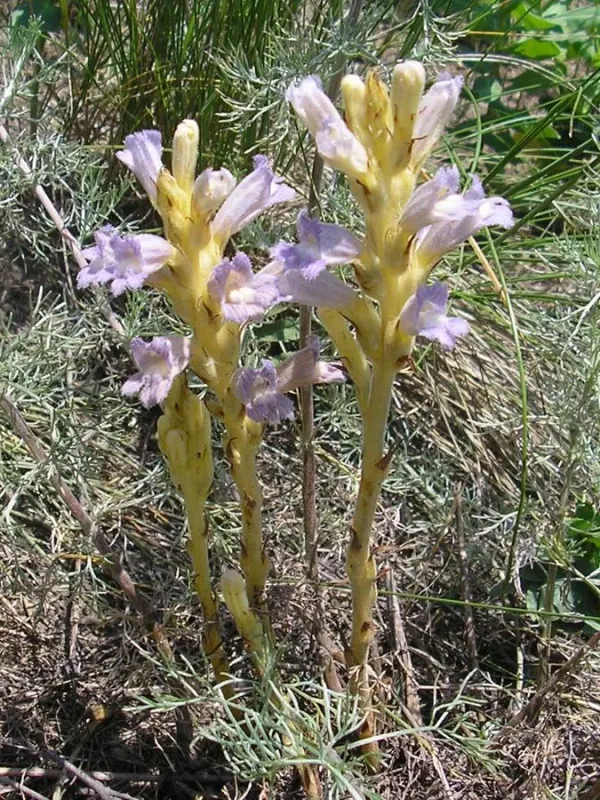
After successful attachment, the parasite develops an underground tubercle before emerging above the soil surface during the flowering stage. Its appearance is characterized by a fleshy, often yellowish or purplish stem adorned with scale-like leaves, producing numerous tiny seeds.
From an agronomic perspective, environmental conditions like soil moisture and temperature significantly influence the parasite's vitality. While it is not always a primary pest in intensive commercial farming compared to other broomrape species, its presence indicates a high risk for potential host crops in the field.
Main diseases and pests
The primary threat posed by Orobanche arenaria is the depletion of the host plant's vital resources. This parasitic drain directly leads to reduced vegetative growth, delayed maturity, and significantly lower crop yields, severely impacting agricultural economic outcomes.
Seeds are highly resilient and can remain dormant in the soil for over a decade, awaiting signals from potential hosts. This long-term persistence makes eradication through simple fallowing difficult, as the seed bank in the soil remains viable even under harsh environmental conditions.
Management strategies focus on integrated pest management (IPM). This includes long-term crop rotation with non-host species, such as cereals or grasses, to deplete the seed bank. Preventing the movement of contaminated soil through agricultural machinery is essential to avoid field-to-field spread.
Chemical control remains challenging due to the intimate vascular connection between the parasite and the host. Current research is focusing on the development of selective herbicides and biological control agents that target the physiological weaknesses of the parasite without harming the crop.
Monitoring and manual removal are crucial in small-scale or early-stage infestations. Removing the parasitic shoots before they set seed is imperative, as a single plant can produce tens of thousands of seeds, which are easily dispersed by wind and field operations.