
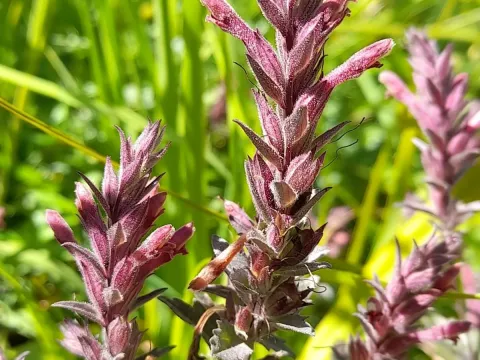
Nothobartsia
Nothobartsia
Nothobartsia is a genus of herbaceous plants belonging to the Orobanchaceae family. These plants are scientifically recognized as hemiparasites, meaning they derive some of their nutrients by attaching to the roots of host plants while still performing photosynthesis.
What the section contains


Nothobartsia
The origin and natural distribution of this genus are primarily associated with the temperate regions of Europe and Asia. They inhabit meadows, grasslands, and open woodland edges where specific host species are available to support their developmental requirements.
Botanically, the plant features specialized root structures called haustoria. These structures penetrate the tissues of host plants, facilitating the transfer of water, minerals, and carbon compounds, which allows Nothobartsia to thrive in competitive environments.
Climate and soil requirements for this genus involve temperate conditions with consistent moisture and high levels of sunlight. They grow best in well-drained, nutrient-moderate soils where the soil profile allows for stable root interactions between the parasite and the host.
While Nothobartsia is not utilized as a mainstream agricultural crop, it remains a subject of interest in ecological restoration and botanical research, particularly in the study of plant-parasite interactions within complex native ecosystems.
The primary threats to Nothobartsia populations are habitat degradation and changes in land management practices. Agricultural intensification and the loss of diverse meadows directly impact the availability of essential host plants.
Fungal diseases, including various types of mildew and root rot, represent significant threats, especially in areas where soil aeration is poor or where stagnant water creates an environment conducive to pathogen proliferation.
Common pests affecting the aerial parts include various aphids and leaf-mining larvae. These insects can reduce the photosynthetic capacity of the plants and facilitate the entry of secondary viral or bacterial infections.
Chemical stress from the widespread application of herbicides and systemic pesticides is particularly harmful to Nothobartsia, as it disrupts the delicate balance of the plant community and the viability of the haustorial connection.
Conservation strategies focus on maintaining intact grassland ecosystems, minimizing chemical inputs, and protecting the biodiversity of indigenous host plants upon which the survival of Nothobartsia depends.