
Orobanche canescens
Orobanche canescens
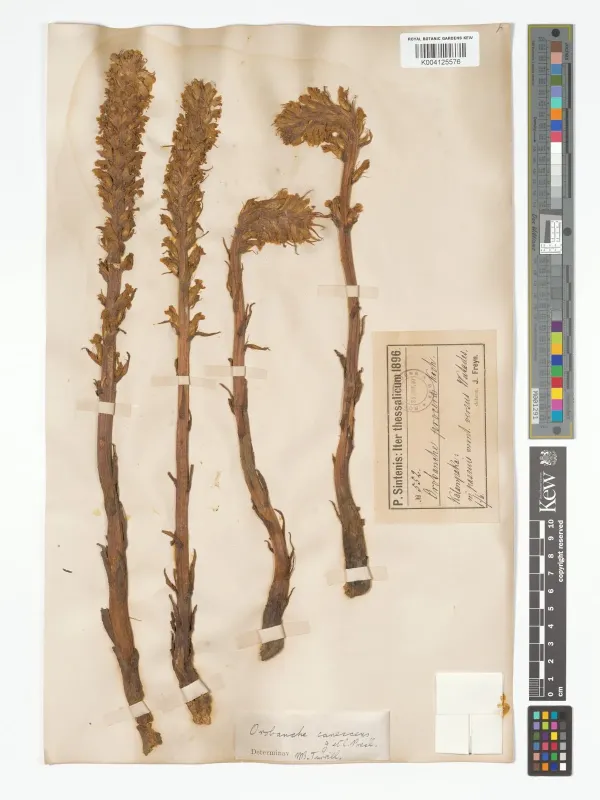
Description
Main diseases and pests
Orobanche canescens is a member of the Orobanchaceae family and represents a significant agricultural challenge as an obligate root parasite. Lacking chlorophyll, the plant is entirely dependent on its host for nutrients, water, and carbohydrates to complete its life cycle.
The parasitic life strategy of this species involves the development of specialized attachment organs known as haustoria. These penetrate the root system of the host plant, effectively hijacking its vascular system and draining critical nutrients intended for growth and seed production.
Infestation by Orobanche canescens causes severe physiological stress to crops, often resulting in stunted growth, chlorosis, and significant yield losses. The impact is most profound in arid and semi-arid regions where host plants are already struggling with water availability.
Reproductive success for this species is driven by the production of vast quantities of minute, dust-like seeds. These seeds remain viable in the soil for extended periods, remaining dormant until the presence of specific root exudates triggers the germination process.
Management of this parasitic weed is notoriously difficult due to its subterranean life phase and persistence in the seed bank. Integrated management approaches, including long-term crop rotation and the selection of resistant cultivars, remain the primary defense for farmers.