
Orobanche camphorosmae
Orobanche camphorosmae
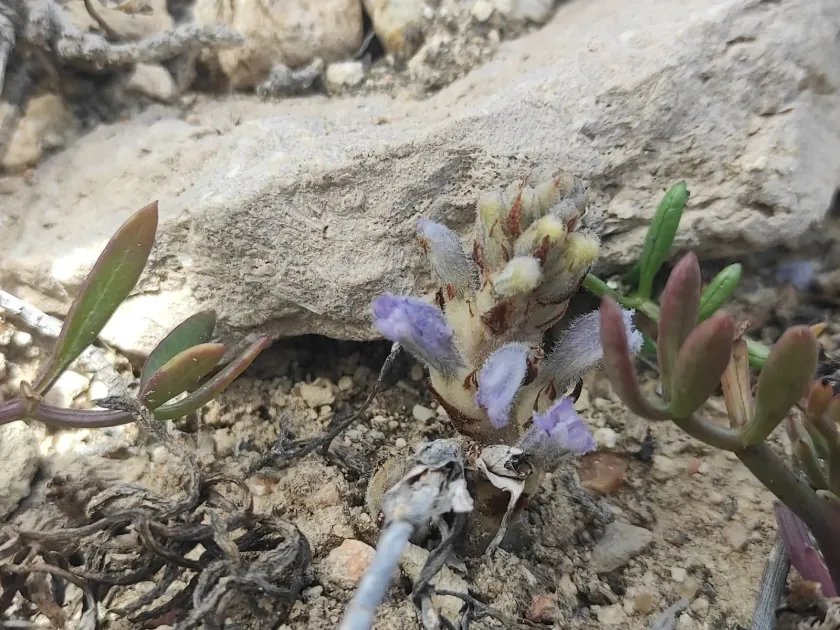
Description
Growing requirements
Orobanche camphorosmae is a highly specialized parasitic plant species belonging to the family Orobanchaceae. Being a holoparasite, it lacks chlorophyll and cannot synthesize its own food, relying entirely on the root system of its specific host plants.
The distribution of this species is tied closely to the presence of Camphorosma taxa. It is typically found in arid, semi-arid, and saline soil environments where the host plant thrives naturally. It does not possess a traditional agricultural cultivation cycle.
Botanically, the plant remains underground for the majority of its life cycle, developing a network of haustoria that penetrates the host's roots to extract water and nutrients. Only the floral spikes emerge above the surface during the reproductive phase.
Regarding environmental conditions, the plant is highly adapted to harsh, dry climates. Its survival strategy depends on the detection of chemical root exudates from the host, which trigger the germination of the parasite's microscopic seeds within the soil.
In the context of land management, the plant is considered a problematic pest. Its biology is centered on maximizing reproductive success, producing thousands of tiny, wind-dispersed seeds that can remain dormant and viable in the soil for several years.
Main diseases and pests
The primary threat posed by Orobanche camphorosmae is the physiological stress it induces in host plants. By diverting carbon, water, and essential mineral nutrients, the parasite severely limits the growth and yield of the invaded vegetation.
Agricultural control involves integrated pest management strategies, including long-term crop rotation with non-host species. Reducing the seed bank in the soil is crucial, as the parasite can re-emerge quickly if host populations are reintroduced into contaminated areas.