
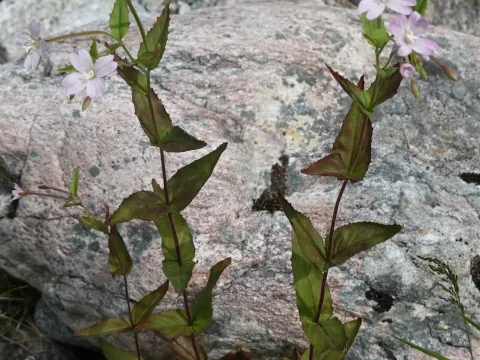
Hill willowherb
Epilobium collinum
Hill willowherb (Epilobium collinum) is a perennial herbaceous plant belonging to the Onagraceae family. It is typically found in temperate regions, thriving in dry, rocky soils, forest edges, and open hillsides where well-drained conditions are prevalent.
What the section contains
Hill willowherb
The plant has evolved to be highly resilient, capable of growing in nutrient-poor substrates. Its ecological niche is primarily in areas with plenty of sunlight and a moderate climate, where it remains relatively unaffected by seasonal temperature fluctuations.
Botanically, it features an erect stem and lanceolate leaves adapted to withstand wind and low moisture availability. Its root system is designed for stability in gravelly or sandy terrain, making it an excellent candidate for stabilizing soil on slopes.
Regarding cultivation requirements, Hill willowherb demands full sun exposure to flourish. It is sensitive to waterlogging, so ensuring adequate soil drainage is the most important factor in preventing root damage and ensuring the plant reaches maturity.
Maintenance is relatively simple compared to more intensive agricultural crops. It does not require high levels of nitrogen fertilizer, as it is adapted to natural soil compositions. Providing space for air circulation is vital to keep the plant vigorous throughout the season.
The most common disease affecting Hill willowherb is powdery mildew, especially during humid summers. This fungal infection can severely impair photosynthetic efficiency and aesthetic value if not managed with proper air circulation.
Pests such as aphids are a significant threat, particularly when they cluster on the tender tips of the plant. If infestation occurs, the plant's growth can be stunted, and flower buds may fail to open, reducing the overall seed production.
Root rot remains a hidden threat when the soil pH or drainage is not optimal. Over-irrigation or planting in heavy clay soils frequently creates an environment where pathogens can compromise the health of the entire plant colony.
Competition from invasive weeds can displace Hill willowherb in its natural habitat. During the establishment phase, manual weeding is necessary to ensure the plant can access nutrients and light without being outcompeted by faster-growing species.
Integrated pest management strategies are recommended to maintain the health of the species. Avoiding chemical pesticides whenever possible will preserve the surrounding ecosystem and protect beneficial insects that interact with the plant's nectar.