
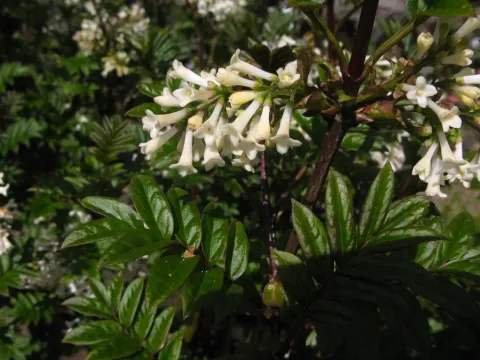
Feather-leaf lilac
Syringa pinnatifolia
The feather-leaf lilac (Syringa pinnatifolia) is a distinctive shrub belonging to the Oleaceae family. It stands out within the genus Syringa due to its unique pinnate leaves, which create a delicate, feathery texture rarely seen in other lilac species, making it a prized specimen for collectors.
What the section contains
Feather-leaf lilac
Originating from the mountainous regions of Western China, this shrub is naturally adapted to rugged terrain and varying climatic conditions. Its natural habitat is characterized by well-drained slopes, which dictates the primary requirements for its successful integration into home gardens.
For optimal health, the plant requires a site with full sun exposure to maintain the density of its foliage and ensure consistent flowering. Soil conditions should be fertile and neutral to slightly alkaline, with excellent drainage, as the roots are sensitive to waterlogged environments.
Cultivation practices involve regular but controlled watering, especially during the establishment phase or prolonged dry spells. Minimal fertilization in early spring is generally sufficient to support annual growth, while pruning should be performed judiciously to maintain the plant's natural, graceful shape.
In landscaping, the feather-leaf lilac serves as an exceptional focal point or specimen plant. Its architectural foliage makes it visually appealing even outside of the spring blooming season, offering a refined look that complements both traditional and modern garden aesthetics.
Common pathological issues include powdery mildew, which often thrives in stagnant air conditions or high humidity. Maintaining proper spacing between plants and ensuring adequate airflow are essential preventative measures to minimize the risk of fungal infections.
Pest problems typically involve lepidopteran larvae or aphids that may target the young growth in the spring. Integrated pest management strategies, focusing on early identification and targeted application of environmentally friendly insecticides, are recommended to protect the shrub's integrity.