
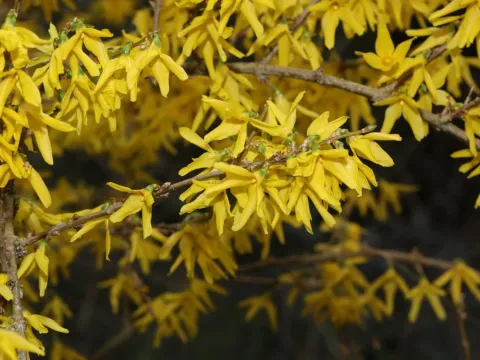
Forsythia
Forsythia Vahl
Forsythia (Forsythia Vahl) is a genus of deciduous shrubs in the Oleaceae family, widely appreciated for its early spring blooms that appear before the leaves emerge.
What the section contains


Forsythia
The genus originates mainly from East Asia, with a single species native to the Balkans. These plants thrive in temperate climates, requiring a well-drained, fertile soil with a neutral to slightly alkaline pH.
Full sun is essential for optimal flowering performance, although Forsythia can adapt to partial shade. However, reduced light significantly affects the density of flower buds in the following season.
Watering requirements are moderate; the plants require consistent moisture during the establishment phase, but mature shrubs are quite tolerant of short dry spells once established.
Pruning is the most critical maintenance task, which should be performed immediately after the flowers fade. This practice encourages the development of new flowering wood for the next cycle.
Forsythia is relatively resistant to most pests and diseases, yet it can be susceptible to fungal infections like Monilinia, which causes branch dieback and dark spots on twigs.
Verticillium wilt is another serious condition that results in the yellowing and wilting of leaves, eventually leading to the decline of the entire plant structure.
Root-knot nematodes can pose a significant threat to the root system, causing stunted growth and preventing the shrub from absorbing necessary nutrients efficiently.
Occasional infestations of aphids may occur during spring, which, while rarely fatal, can weaken the plant and serve as a vector for various viral infections.
Best practices for disease management involve ensuring proper air circulation within the canopy and sanitizing pruning tools to prevent the spread of pathogens between plants.