
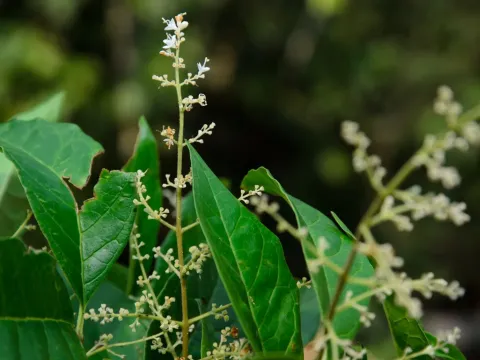
Confused privet
Ligustrum confusum
The confused privet (Ligustrum confusum) is an evergreen shrub belonging to the Oleaceae family. It is native to the diverse landscapes of Southeast Asia, where it typically thrives in mountain forest regions.
What the section contains
Confused privet
Botanically, it is recognized for its dense habit and leathery, lanceolate leaves that retain their vibrant color throughout the season. The shrub is highly valued for its ability to provide structural consistency in garden designs.
It thrives best in well-draining soils that offer moderate fertility. It is essential to avoid sites prone to waterlogging, as the root system of this species requires adequate aeration to remain healthy and productive.
Exposure to full sun or partial shade is ideal for this shrub. While it is adaptable, increased sunlight levels contribute to a denser foliage structure and more efficient nutrient uptake during the active growth phase.
Climatic requirements focus on protection from severe winter winds. Although it is relatively hardy, providing a sheltered location or applying mulch around the base during the first few years after planting is recommended.
The primary threats to Ligustrum confusum include various fungal diseases, such as leaf spot and powdery mildew, which are often exacerbated by poor air circulation or excessive humidity levels.
Insect pests, most notably aphids and scale insects, represent a significant concern. They can infest new growth, leading to yellowing of the leaves and stunted development if left untreated by the grower.
Maintaining clear spacing between plants is an effective cultural practice to reduce the incidence of fungal issues. It ensures that moisture on the leaves evaporates quickly, reducing the environment for pathogen growth.
Integrated pest management, including the use of horticultural oils and soaps, is often successful for controlling common infestations without causing significant harm to the surrounding ecosystem.
Regular inspection and sanitation, including the removal of dead or crossing branches, are crucial for long-term plant health, ensuring the plant remains vigorous and aesthetically appealing throughout its life cycle.