
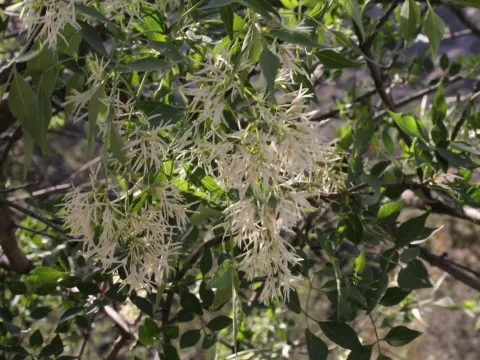
Flowering ash
Fraxinus cuspidata
The Flowering ash (Fraxinus cuspidata), a member of the Oleaceae family, is a medium-sized deciduous tree native to the southwestern United States and northern Mexico. It is highly valued for its beautiful, fragrant white flowers that appear in spring, distinguishing it from many other ash species.
What the section contains
Flowering ash
The species thrives in well-drained, alkaline, and limestone-based soils. It exhibits excellent adaptation to semi-arid climates, making it an ideal candidate for xeriscaping or low-maintenance landscapes where water conservation is a priority.
This tree requires full sun exposure to maintain its structural integrity and encourage prolific blooming. Planting it in shaded or damp environments often leads to stunted growth and increased susceptibility to various pathogens.
Agrotechnical management is relatively straightforward. Once established, the tree demonstrates high drought tolerance, but a consistent moisture regime is beneficial during the first two years of development to ensure a deep, robust root system.
Spacing requirements should be considered during plantation, providing enough room for the crown to spread naturally. Regular pruning is generally unnecessary unless removing dead or crossing branches to improve the aesthetic form of the tree.
The primary threats to the Flowering ash include soil-borne pathogens, specifically root rot, which is triggered by poor drainage and excessive moisture saturation of the soil profile.
Pest pressure is primarily associated with wood-boring insects, which can cause significant structural damage to the trunk. Proactive monitoring and early detection are critical to protecting the health of the specimens.
Fungal diseases, such as powdery mildew or leaf spot, may appear during unusually humid seasons. Improving airflow through selective thinning of the canopy is an effective cultural practice to mitigate these issues.
Chemical control measures should be applied with caution, utilizing systemic insecticides or fungicides only when infestation levels exceed acceptable economic or aesthetic thresholds.
Preventing physical damage to the bark is essential, as open wounds allow pathogens and pests to enter the vascular system of the tree, which can significantly reduce its lifespan and vitality.