
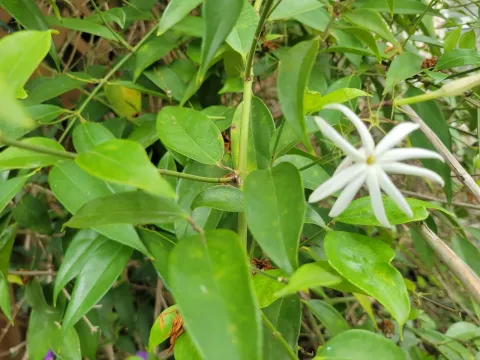
Shining Jasmine
Jasminum nitidum
Shining Jasmine (Jasminum nitidum) is an evergreen woody vine or shrub belonging to the Oleaceae family. It is native to the Admiralty Islands and Papua New Guinea, thriving naturally in humid tropical ecosystems.
What the section contains
Shining Jasmine
The plant requires a warm environment and is strictly a non-hardy species. In cooler regions, it must be grown in containers and moved indoors during the winter months to protect it from freezing temperatures.
For best growth results, Shining Jasmine demands well-draining, nutrient-rich soil. Adding organic matter helps maintain moisture while ensuring the roots do not sit in waterlogged conditions.
Sunlight exposure should be bright but filtered. Too much direct, intense sun can scorch the foliage, while insufficient light leads to leggy growth and a significant reduction in flower production.
Pruning is an essential part of the agricultural management of this plant. It is usually performed after the main flowering season to shape the canopy and encourage dense, healthy growth for the next cycle.
The most common pests affecting Jasminum nitidum are spider mites, which thrive in low-humidity indoor conditions. They feed on the sap and can lead to yellowing leaves.
Scale insects are another frequent issue, appearing as small bumps on stems and the underside of leaves, necessitating mechanical removal or specific horticultural oil treatments.
Whiteflies can also cause significant stress to the plant, especially if the airflow is poor, often resulting in the development of sooty mold on the honeydew they produce.
Fungal issues such as root rot frequently stem from over-irrigation. Ensuring the container has adequate drainage holes is vital to prevent soil saturation.
Effective management includes regular monitoring and the use of integrated pest control strategies to maintain the health and aesthetic value of the shrub.