
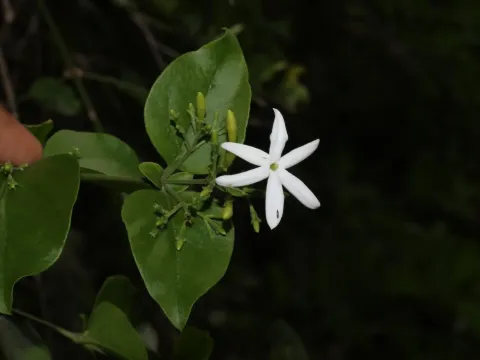
Jasminum auriculatum
Jasminum auriculatum
Jasminum auriculatum is typically propagated through semi-hardwood stem cuttings taken during the active growth phase to ensure strong root development.
What the section contains
Jasminum auriculatum
The cuttings are placed in a well-draining, moist medium and kept under controlled temperature conditions of approximately 22–25 degrees Celsius.
Successful rooting requires high humidity levels, which can be maintained through misting or by covering the cuttings with transparent material.
For outdoor plantations, the ideal planting time is after the last frost, ensuring the soil has warmed sufficiently for the plants to establish quickly.
Young plants should be spaced appropriately, allowing for adequate air circulation which is vital to prevent fungal infections and encourage uniform growth.
Jasminum auriculatum, belonging to the Oleaceae family, is a highly aromatic shrub often cultivated for its intensely fragrant white flowers.
The plant thrives in full sun, which is necessary for the development of abundant flower buds and the synthesis of aromatic essential oils.
Well-drained, sandy loam soil enriched with organic compost provides the ideal environment, preventing waterlogging which is detrimental to the roots.
Being a sub-tropical species, it requires protection from freezing temperatures and is best suited for warm, humid climates or controlled greenhouse environments.
Regular application of balanced fertilizers during the growing season significantly improves the overall vigor and reproductive capacity of the shrub.
The economic value of this crop is primarily derived from its flowers, which are processed to produce high-grade jasmine absolute for the perfume industry.
Yield depends heavily on consistent pruning, which stimulates the growth of new, flower-bearing laterals and keeps the bush at a manageable size.
Flower production is continuous throughout the warm season, provided that the plant receives adequate moisture and essential nutritional support.
Hand-harvesting is the standard practice to ensure that the delicate flowers remain intact, preventing oxidative degradation of the aromatic oils.
Proper water management during the budding phase is critical, as any stress can lead to premature flower drop and reduced overall harvest quantities.
Common pests include red spider mites and scale insects, which frequently attack the foliage under hot and dry atmospheric conditions.
Fungal issues such as powdery mildew can emerge if there is insufficient air movement or excessive moisture accumulation on the leaves.
Root rot is a major threat in poorly drained soils, necessitating strict adherence to watering protocols and the use of healthy, pathogen-free substrate.
Integrated pest management, focusing on biological controls, is preferred to ensure the chemical purity of the harvested floral material.
- Spider mites
- Scale insects
- Powdery mildew
- Root rot
Harvesting must be timed precisely, with the best practice being to pick the flowers in the early morning before the sun raises the temperature.
The flowers are highly volatile and lose their fragrance rapidly if not transported to the processing facility within a few hours of collection.
Specialized handling is required to prevent the crushing of blossoms, as damaged flowers release their oils prematurely and reduce quality.
Storage areas must be kept cool and dark to minimize the evaporation of aromatic compounds before the extraction process begins.
The frequency of harvesting is high during the peak flowering season, often requiring daily attention to maximize the total seasonal yield.