
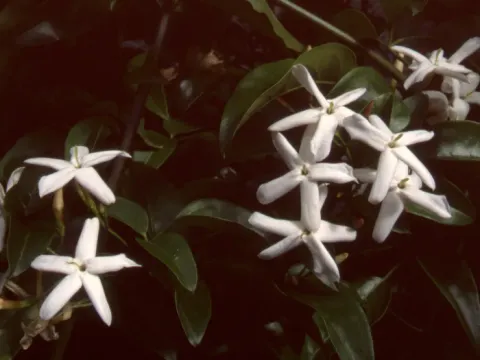
Jasmine hybrid
Jasminum hybrids
Jasmine hybrid (Jasminum hybrids) represents a diverse group of ornamental plants belonging to the Oleaceae family. These hybrids are developed through rigorous selective breeding to enhance fragrance, flower size, and overall resilience to varying environmental conditions across different regions.
What the section contains
Jasmine hybrid
These plants thrive in full sun to partial shade, requiring fertile, well-draining soil to ensure healthy root development. A neutral to slightly acidic soil reaction is ideal for optimal nutrient uptake, and adding organic compost at planting time significantly boosts plant vigor.
Agricultural management of jasmine involves precise watering techniques. During the active growth season, deep and regular irrigation is essential, while during the winter dormancy period, watering must be significantly reduced to prevent root rot in cold, moist conditions.
Pruning is essential for maintaining the structure and flowering potential of hybrid jasmine. Gardeners should prune immediately after the primary flowering period, removing dead wood and thinning out crowded branches to encourage airflow and new growth for the next season.
In terms of climate, most hybrids require moderate temperatures. While some varieties are frost-hardy, many require protection in regions where temperatures drop below freezing, such as mulching the base or moving containerized plants to sheltered areas during severe cold snaps.
The most common pests affecting hybrid jasmine are aphids and spider mites, which tend to infest the plant during hot and dry spells. Integrated pest management, including the use of neem oil or insecticidal soap, is effective in keeping populations at bay without damaging the plant.
Fungal diseases like powdery mildew often arise due to poor ventilation or high humidity. Maintaining adequate spacing between plants and avoiding overhead irrigation helps minimize the risk of infection, ensuring that the foliage remains dry and healthy throughout the growing season.