
Magnificent Jasmine
Jasminum magnificum
Description
Growing requirements
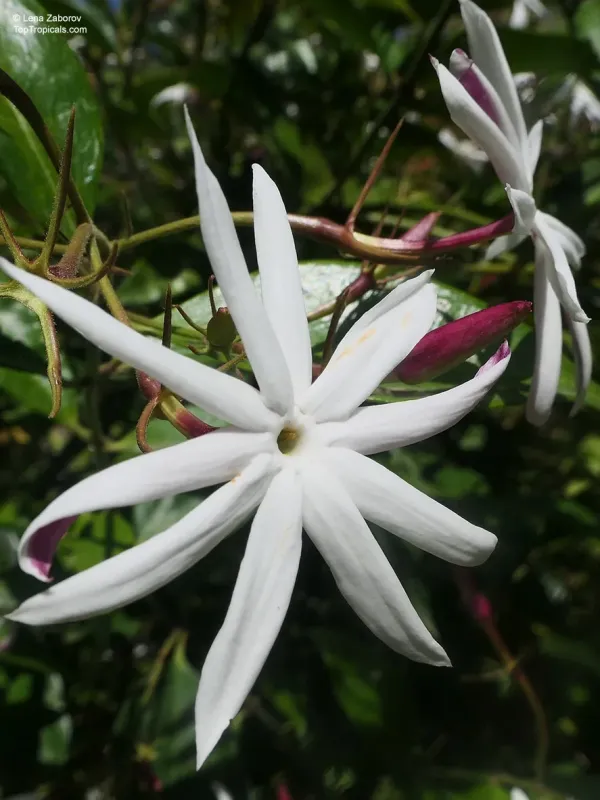
Jasminum magnificum, known as the Magnificent Jasmine, is a member of the Oleaceae family. This woody climbing plant is highly valued for its large, fragrant flowers and vigorous growth habit, making it an excellent candidate for ornamental horticulture.
The plant requires a bright, sunny location to thrive, though it can tolerate light shade during the hottest parts of the day. It is highly sensitive to cold, making it suitable for cultivation in mild climates or in controlled environments like greenhouses where temperatures can be regulated.
Well-draining, nutrient-rich soil is essential for the healthy development of this jasmine variety. It performs best in slightly acidic to neutral soil environments, provided that the growing medium remains loose to ensure adequate oxygen penetration to the roots.
Proper agronomic management involves consistent irrigation during the peak growth season, ensuring that the soil is kept moist but never waterlogged. Regular pruning is necessary to control its climbing habit and to promote denser flowering in the following season.
Economically, this species is utilized primarily in professional landscaping and garden design for vertical structural covers. Furthermore, its fragrant blooms hold potential in the botanical extract industry for the production of floral essences and high-quality aromatic oils.
Main diseases and pests
Spider mites and scale insects represent the primary pest threats to Jasminum magnificum. These pests tend to thrive in dry conditions, making humidity management a crucial component of integrated pest management strategies for this crop.
Fungal pathogens such as powdery mildew may develop if the plant is kept in environments with poor air circulation. Applying systemic fungicides and ensuring proper spacing between plants are effective ways to mitigate the risk of these common infections.