
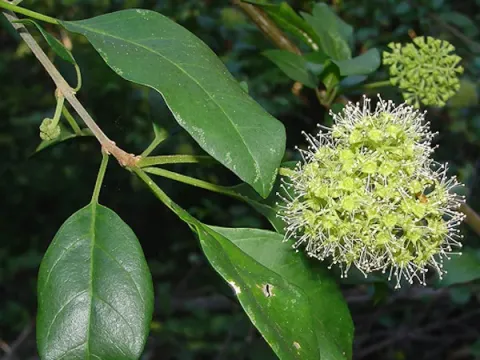
Pisonia aculeata
Pisonia aculeata
Pisonia aculeata, commonly known as the thorny pisonia, is a sprawling evergreen shrub or woody vine belonging to the Nyctaginaceae family. The plant is botanically recognized by its recurved, hook-like thorns, which allow it to climb and interlock, creating dense thickets that act as a physical barrier in natural habitats.
What the section contains
Pisonia aculeata
Native to tropical regions across the Americas, Africa, and Asia, this culture thrives in diverse soil types, including sandy and rocky substrates. It requires a frost-free, tropical climate to maintain its evergreen growth habit. Extreme sensitivity to cold limits its agricultural application to specific geographic zones within the equatorial belt.
Regarding climate and soil, Pisonia aculeata favors high light exposure and well-drained soil conditions. While it is inherently drought-tolerant once established, optimal growth occurs in areas with consistent moisture. Proper site selection must account for the plant's aggressive growth rate, as it requires significant space to develop its canopy fully.
The primary agricultural use of this species involves the establishment of living fences and security barriers. Its ability to create impenetrable thickets makes it an efficient biological alternative to structural fencing. Additionally, the plant serves various roles in ecological restoration and tropical landscaping, though its invasive potential in certain ecosystems must be managed carefully.
Cultural management involves regular pruning and training to maintain structural integrity and control the spread of the thorny branches. Propagation is typically achieved through seeds, which exhibit a sticky, glandular coating designed to adhere to animal fur or feathers for dispersal, requiring mechanical cleaning prior to agricultural sowing.
Pisonia aculeata is generally robust, yet it remains susceptible to common tropical pests such as mealybugs and scale insects. Maintaining proper airflow within the canopy is essential to prevent secondary infections, particularly sooty mold, which can develop on the honeydew secreted by these pests in humid environments.