
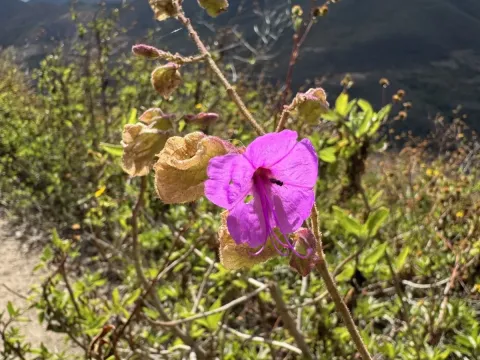
Mirabilis viscosa
Mirabilis viscosa
Mirabilis viscosa is primarily propagated through seeds. In temperate climate zones, it is recommended to sow seeds in containers during March or April to provide the plant with a sufficient vegetative period before the season ends.
What the section contains
Mirabilis viscosa
For direct sowing in open ground, one must wait until the soil temperature reaches at least +15 degrees Celsius. The optimal time for such operations is late May, once the risk of night frosts has completely passed.
The seeds should be planted at a depth of 2-3 centimeters. It is crucial to maintain adequate spacing between plants, as the species tends to develop a vigorous root system and a wide, sprawling above-ground structure.
Pre-treatment of seeds, such as soaking in warm water for several hours, facilitates uniform germination. The first seedlings typically emerge within 10–14 days after sowing, provided that substrate moisture is maintained at a constant level.
To achieve maximum aesthetic and biological productivity in commercial or landscaping projects, the transplant method is preferred, as it significantly reduces the acclimatization period of the plants in their permanent location.
Mirabilis viscosa belongs to the Nyctaginaceae family and is native to South American regions. The crop is highly demanding of intense sunlight, as growth in shaded areas results in weak, brittle stems and a significant reduction in flowering performance.
Regarding soil conditions, the plant prefers well-drained, fertile loams with a neutral or slightly alkaline pH. Waterlogging in the root zone is detrimental, making a drainage layer essential when planting in heavy soil types.
The temperature regime must remain consistently warm. Mirabilis cannot tolerate even short-term freezing temperatures, and therefore, it is typically cultivated as an annual in colder climates despite having a tuberous root thickening.
Regular irrigation is necessary during the active growth phase, particularly during the budding stage. However, once the plant reaches maturity, it demonstrates moderate resistance to short drought periods due to its deep and effective root system.
To ensure abundant flowering, timely application of complex mineral fertilizers with low nitrogen content during the second half of the vegetation cycle is recommended, which helps strengthen plant tissues and support bud formation.
Mirabilis viscosa exhibits natural resistance to several diseases, though improper agronomic practices can lead to late blight infection. The primary signs include the appearance of dark spots on stems and leaves during periods of high air humidity.
Powdery mildew often appears during periods of sharp fluctuations between day and night temperatures. For prevention, it is recommended to thin out plantings and ensure adequate air circulation between individual specimens.
Pests such as aphids and spider mites can cause significant damage to young shoots. Regular inspection of the undersides of the leaves allows for the early detection of insect colonies before they cause severe foliage damage.
Root rot, caused by fungal pathogens in waterlogged soils, often leads to the sudden wilting of the plant. In such cases, chemical fungicides are rarely effective, shifting the management focus entirely to preventive measures.
Slugs and snails pose a direct threat to young sprouts in the spring. Utilizing mulching materials or installing physical barriers around the planting area helps to minimize damage caused by these gastropods.