
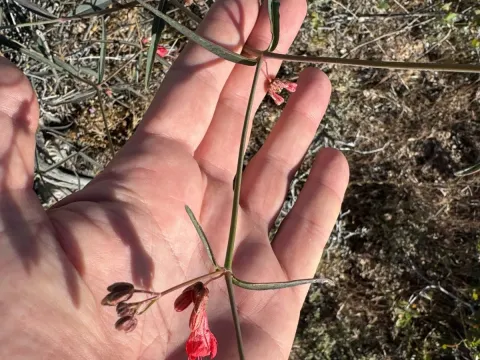
Red Four O'Clock
Mirabilis coccinea
Red Four O'Clock (Mirabilis coccinea) seeds are sown in the open ground once the threat of spring frost has completely passed. The ideal timing is late spring, typically late May, when the soil has warmed sufficiently.
What the section contains
Red Four O'Clock
For gardeners in cooler regions, starting seeds indoors in early April is recommended. Using individual peat pots allows for easier transplanting, as the plant possesses a sensitive root system that dislikes disturbance.
Seeds should be planted at a depth of approximately 2 to 3 centimeters. A spacing of 40–50 centimeters between plants is essential, as the species tends to spread significantly and requires space to develop its bushy architecture.
Prior to sowing, soaking the seeds in warm water for several hours is a proven technique to soften the seed coat. This preparation significantly enhances germination rates and ensures more uniform emergence of seedlings.
After transplanting indoor-grown starts into the garden, it is vital to provide consistent moisture until the plants establish themselves. Once the roots are settled, the plant becomes remarkably resilient to fluctuating environmental conditions.
The Red Four O'Clock belongs to the Nyctaginaceae family and thrives in full sun exposure. It requires at least six to eight hours of direct sunlight daily to produce its signature vibrant red blossoms effectively.
While the plant is adaptable to various soil types, it prefers well-draining, moderately fertile loams. If your garden soil is heavy or prone to waterlogging, incorporating organic matter and sand can help optimize growing conditions.
Watering requirements are moderate; the plant is drought-tolerant once established. However, during prolonged heatwaves, regular supplemental irrigation will keep the foliage lush and maintain the intensity of the flowering display.
Nutrient management involves applying a balanced fertilizer during the early vegetative stage. Avoiding excessive nitrogen is crucial, as it often encourages foliage overgrowth at the expense of floral production in this specific variety.
Maintenance of the surrounding area through regular weeding is beneficial. Mulching the base of the plant helps retain soil moisture, suppress weeds, and provide a stable thermal environment for the roots during high summer temperatures.
The primary concern for Red Four O'Clock is root rot, which typically develops in poorly drained, waterlogged soils. Ensuring adequate drainage at the planting site is the most effective preventative measure against this issue.
Fungal diseases like powdery mildew may appear during periods of high humidity and poor air circulation. Providing sufficient spacing between plants and avoiding overhead watering can significantly reduce the risk of infection.
Aphids are the most common insect pests that attack the soft, succulent stems and buds. Early detection is key; manual removal or the application of insecticidal soaps is usually sufficient to handle minor infestations.
Spider mites can become a nuisance during extremely hot and dry summer months. Inspecting the undersides of the leaves periodically can help identify these pests before they cause significant yellowing or damage to the plant.
Employing a robust garden hygiene program, including the removal of dead foliage at the end of the season, serves as a great preventative strategy for managing potential disease and pest cycles in subsequent years.