
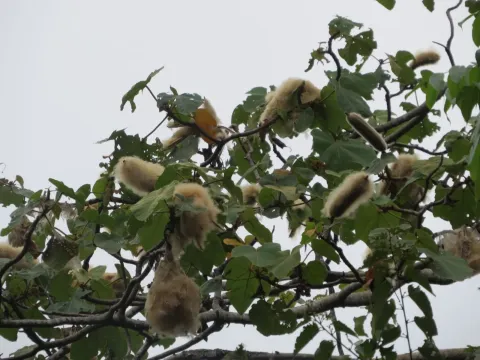
Ochroma peruviana
Ochroma peruviana
Ochroma peruviana is a tropical tree species belonging to the Malvaceae family. It is renowned for its rapid growth rate and the production of low-density timber, which is highly sought after in various industries.
What the section contains
Ochroma peruviana
The species thrives in humid tropical climates where rainfall is abundant throughout the year. It requires stable temperatures, generally between 22°C and 30°C, and cannot tolerate freezing temperatures or prolonged drought conditions.
Successful cultivation requires deep, fertile, and well-drained soils. Alluvial soils found in river valleys are considered ideal, provided they are not waterlogged, as the species is highly susceptible to root decay if drainage is poor.
Light availability is a critical factor for the growth of this tree. It is a heliophytic plant, meaning it needs full, direct sunlight to support its rapid development and to reach its full potential height and girth within a short timeframe.
Agronomic management involves weed control during the establishment phase and protection against high winds, which can easily snap the brittle branches of young trees. Regular thinning is also recommended to ensure the strongest individuals have enough space to grow.
The primary yield is the lightweight wood, which is utilized for aerospace models, flotation devices, and thermal insulation. Under optimal plantation conditions, the trees can reach harvestable size within 6 to 10 years after planting.
Main threats include fungal root rots induced by excess soil moisture and various leaf-spot pathogens. Additionally, sap-sucking insects and stem-boring beetles can cause significant losses in young plantations if not managed correctly.
Harvesting involves the felling of mature trees. Post-harvest, the wood must be processed and kiln-dried immediately to maintain its cellular structure and prevent degradation from humidity or wood-decaying fungi.