
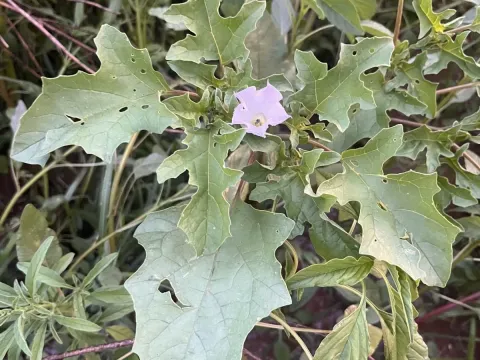
Oak-leaved datura
Datura quercifolia
Sowing of Datura quercifolia is typically performed in the spring when soil temperatures at the planting depth reach 12–15 degrees Celsius. Selecting a sun-drenched location is essential, as this crop requires significant light intensity throughout its entire vegetative growth phase to thrive.
What the section contains
Oak-leaved datura
The optimal sowing pattern involves maintaining rows 60 to 70 centimeters apart, facilitating easier care and mechanical soil cultivation. Seeds are sown at a depth of no more than 2–3 centimeters, which ensures rapid germination provided there is adequate moisture in the topsoil layer.
For transplanting methods, seeds are sown in greenhouses 4–6 weeks before the final outdoor planting. This approach allows the plants to adapt faster and develop significant biomass, which serves as the raw material for extracting alkaloids.
Pre-sowing treatments are often employed to enhance germination uniformity. Datura quercifolia shows strong germination energy when consistent temperatures are maintained, which is a prerequisite for developing a robust root system capable of supporting heavy foliage growth.
Once mass emergence occurs, thinning is conducted to maintain a spacing of 30–40 centimeters between plants. This measure prevents excessive canopy density, which could otherwise promote disease development due to poor air circulation within the crop rows.
Datura quercifolia belongs to the Solanaceae family and is native to regions of Central and North America. In its natural habitat, it often behaves as a ruderal species, demonstrating an ability to colonize open ground and adapt to a variety of environmental conditions.
The crop has moderate soil requirements, preferring loose, fertile substrates with a neutral to slightly acidic pH. Effective drainage is critical, as waterlogged conditions in the root zone can lead to rot and significantly reduce the concentration of active medicinal compounds.
While the plant exhibits drought tolerance, regular irrigation is required during critical growth phases, especially during budding, to maximize biomass production. Moisture stress during this time can trigger premature flowering and hinder overall vegetative development.
Climate requirements include a sufficiently long, frost-free period. Datura quercifolia is sensitive to cold temperatures, and prolonged exposure to near-freezing conditions can damage the plant, limiting its commercial cultivation to regions with temperate to warm climates.
The crop thrives with intensive nutrient management, particularly regarding nitrogen and phosphorus application. Incorporating organic matter during pre-season soil preparation establishes a nutrient reservoir that supports sustained plant development throughout the season.
The commercial cultivation of Datura quercifolia is primarily aimed at producing raw medicinal material. Both leaves and seeds contain a complex profile of tropane alkaloids, including hyoscyamine, scopolamine, and atropine, which hold significant value for the pharmaceutical industry.
Yield levels for green matter depend heavily on adherence to agricultural best practices and soil fertility. Under well-managed conditions, industrial-scale fields can achieve high productivity, ensuring economic viability for the production of these botanical extracts.
Alkaloid accumulation in plant tissues varies throughout development, peaking during the flowering stage. Consequently, strict timing of the harvest is necessary to ensure the pharmacological quality of the raw material meets industrial standards.
Following harvest, the raw material must undergo immediate drying at temperatures of 40–50 degrees Celsius. This processing step is vital to inactivate enzymes that could degrade the alkaloids and to prevent spoilage from microbial activity.
The economic success of cultivating Datura quercifolia is tied to consistent demand from pharmaceutical manufacturers. Its high content of bioactive compounds makes it a strategic crop for synthesizing specific medications derived from natural sources.
Typical diseases affecting Datura quercifolia include fungal infections such as powdery mildew and various types of root rot. These diseases thrive in humid conditions and poor ventilation, making proper crop management and spacing the primary defense mechanisms for the farmer.
Pests, particularly sap-sucking insects like aphids and spider mites, pose the greatest threat to the crop. These pests not only weaken the plant by feeding on its juices but can also act as vectors for viral infections that compromise the quality of the raw material.
Integrated pest management strategies are used to control infestations, involving crop rotation, weed control, and the judicious use of fungicides and insecticides. Regulatory compliance regarding pesticide residue limits is essential for crops intended for pharmaceutical processing.
Maintaining a clean field by managing weeds is a crucial aspect of phytosanitary management, as these plants often serve as reservoirs for pests and pathogens. Regular inter-row cultivation promotes a healthy environment that bolsters the crop's natural resistance.
In cases of significant outbreaks, local containment measures are prioritized. Preventive treatments applied during key growth phases help to minimize yield losses while ensuring that the harvested material remains free of contamination.
Harvesting the leaves is typically done in stages, beginning with the lower tiers of the plant once they reach maturity. The optimal time for collection is the start of the flowering period, as this phase corresponds to the highest concentration of active components.
Seeds are harvested once the fruit capsules turn brown and begin to dry out. It is essential to time the harvest accurately to prevent the pods from splitting and shedding seeds on the ground, which would result in substantial crop loss.
Large-scale operations often utilize specialized harvesters adjusted for solanaceous crops, whereas smaller operations may rely on manual harvesting. Manual collection allows for better on-site sorting, ensuring only the highest quality plant parts are selected.
Harvested material should not be stored in a fresh state for any significant length of time, as this leads to self-heating and the degradation of active compounds. Rapid transportation to drying facilities is a standard requirement in the production cycle.
After the harvest is completed, plant residues must be cleared and properly disposed of to prevent the carryover of pathogens into the next growing season. Careful post-harvest management is essential to maintain the pharmacological potency of the final product.