
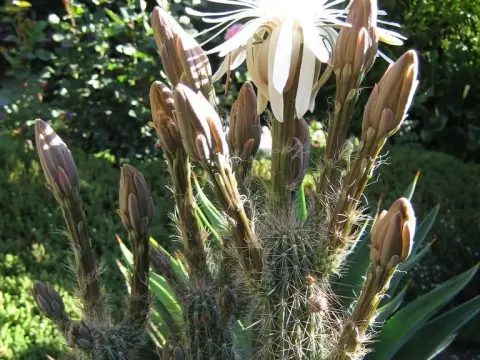
Nyctocereus
Nyctocereus
Nyctocereus is a genus of cacti belonging to the Cactaceae family, native to Mexico and parts of Central America. These plants are characterized by their nocturnal blooming habit, where large, often white flowers open at night to attract pollinators.
What the section contains
Nyctocereus
Successful cultivation requires a well-lit environment with bright, indirect sunlight. Exposure to direct afternoon sun should be avoided to prevent stem scorching, while providing adequate ventilation to simulate their natural habitat conditions.
Soil requirements focus on high drainage capacity. A typical cactus mix consisting of potting soil, coarse sand, and perlite is ideal. This composition ensures that water drains rapidly, preventing the roots from sitting in moisture, which is the primary cause of decline.
The watering regime is critical: water deeply during the active growing season, allowing the soil to dry out completely between waterings. During winter dormancy, the plant should be kept relatively dry and cool to encourage proper seasonal development and future flowering.
Economically and horticulturally, Nyctocereus is valued as a specialty ornamental plant. Its trailing or climbing stems make it suitable for hanging baskets or trellis training in greenhouses, where it serves as a fascinating subject for specialized botanical collections.
The primary pests affecting Nyctocereus are mealybugs and spider mites. These pests thrive in dry conditions and can cause significant damage to the plant epidermis, leading to stunted growth if not managed promptly with appropriate insecticides.
Fungal pathogens such as stem rot are common risks, usually triggered by overwatering or poor air circulation. To mitigate these threats, maintain strict hygiene, ensure pots have drainage holes, and avoid wetting the stems directly during irrigation.