
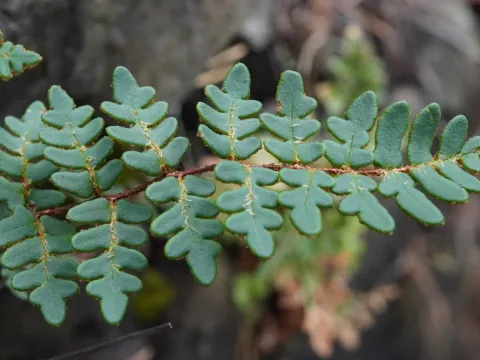
Notholaena marantae
Notholaena marantae
Notholaena marantae is a lithophytic fern belonging to the Pteridaceae family. This species is native to rocky environments across Southern Europe and the Caucasus, where it grows in limestone crevices, exhibiting remarkable adaptation to arid conditions.
What the section contains
Notholaena marantae
Agronomically, this crop is classified as a xeric fern. Its botanical features include a creeping rhizome and fronds covered with distinctive scales, which serve as an adaptation to reduce transpiration and protect the plant against intense solar radiation in its natural habitat.
The primary soil requirement for Notholaena marantae is a mineral-rich, highly porous substrate. A typical potting mix should consist of volcanic rock fragments, coarse sand, and a small percentage of loam. Proper drainage is the single most important factor for plant longevity.
Regarding climate, this fern prefers moderate temperature regimes with distinct seasonal changes. Unlike most ferns that demand high atmospheric humidity, this species thrives in well-ventilated areas where the air circulation prevents fungal development on the fronds.
Light levels should be high, preferably bright indirect or early morning sun. In an indoor setting, avoiding water stagnation at the roots is vital, as the species is highly susceptible to root rot in waterlogged media.
The most significant threat to Notholaena marantae is fungal root pathogens caused by overwatering. When the substrate remains wet for extended periods, the rhizomes begin to decay rapidly, leading to the collapse of the plant structure.
Pests such as scale insects and spider mites frequently infest this species. Because of the scales on the fronds, these pests are often difficult to detect until they have formed substantial colonies, weakening the host plant significantly.
Spider mites thrive in warm, dry environments, which are often encouraged for this fern. Monitoring for white webbing or yellow stippling on the fronds is essential for early detection and mitigation before damage becomes irreversible.
Chemical control measures must be handled with care. As ferns are sensitive to heavy metals and some petroleum-based sprays, testing on a small part of the plant is recommended before applying any insecticide or acaricide across the entire specimen.
Proactive cultural management, including isolating new plants and ensuring sterile growing media, remains the best strategy for maintaining healthy populations and minimizing the impact of potential outbreaks.