
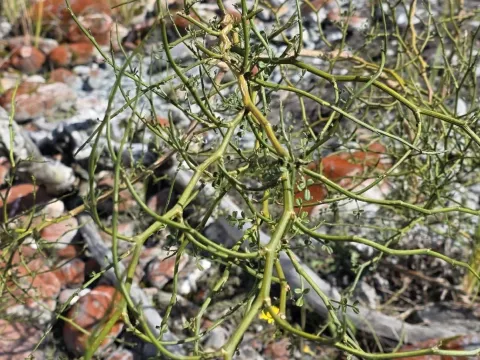
Notospartium
Notospartium
Notospartium is a genus of flowering plants in the legume family (Fabaceae), native to the South Island of New Zealand. Known commonly as "pink broom," these plants are famous for their cascading, leafless, and photosynthetic stems that create a unique aesthetic.
What the section contains
Notospartium
These shrubs thrive in habitats that feature excellent drainage, such as river shingle or rocky hillsides. In a cultivation environment, it is essential to replicate these conditions by using sandy or gravelly soil substrates that do not retain excessive moisture.
The plant requires full sun exposure to maintain its compact growth habit and to induce prolific flowering during the early summer months. Providing a sheltered spot, protected from strong winds, helps to maintain the delicate structural integrity of the branches.
Biologically, Notospartium is adapted to nutrient-poor soils. It has a symbiotic relationship with nitrogen-fixing bacteria, which allows it to thrive in environments where other species would struggle. Excessive fertilization is counterproductive and can lead to succulent growth that is prone to winter damage.
The primary use of this species is in ornamental horticulture. Its striking appearance, characterized by long, pendulous racemes of pink or purple flowers, makes it a prized specimen for rock gardens, dry slopes, and xeriscaped landscape designs.
The most significant threat to Notospartium is root rot, caused by poor soil drainage and waterlogging. Once the root system is compromised by anaerobic conditions, the plant is difficult to save, making soil preparation the most critical aspect of its care.
Aphids and spider mites are the most common pests that affect the green stems. These insects can be particularly problematic during periods of drought or stress, where they weaken the plant by feeding on the sap of the young, tender growth.
Powdery mildew can occur in areas with high humidity and poor air circulation. To prevent this, it is recommended to prune away dead branches after flowering, which improves airflow throughout the center of the shrub and minimizes the moisture trap.
Weed competition is another threat, especially in the early stages of establishment. Surrounding grasses or aggressive weeds can steal nutrients and moisture, so keeping the base of the plant clear is essential for long-term health.
Proper sanitation involves immediate removal of any branches that show signs of fungal infection. Since the plant is highly specialized, maintaining the ecological balance around the root zone is far more effective than chemical intervention.