
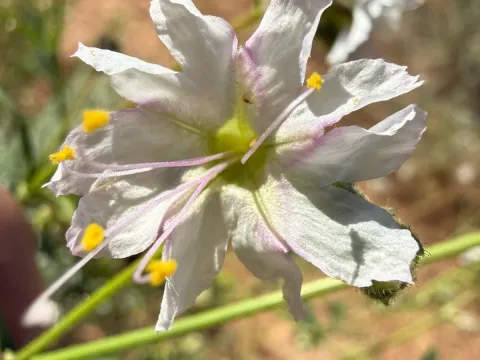
Narrowleaf four o'clock
Mirabilis linearis
Mirabilis linearis, commonly known as Narrowleaf four o'clock, belongs to the Nyctaginaceae family. It is a perennial herbaceous plant often grown as an annual in various agricultural settings.
What the section contains
Narrowleaf four o'clock
Seed sowing should be initiated in late March or early April in controlled indoor conditions, maintaining temperatures around 20–22 degrees Celsius for successful germination.
Transplanting into open ground must occur only after the danger of frost has passed, as the plant is highly sensitive to early cold temperatures.
Direct sowing is possible in warmer climates provided the soil has warmed up to at least 15 degrees Celsius for consistent growth development.
A spacing of 30–40 cm between plants is recommended to promote optimal airflow and prevent the development of moisture-related diseases.
This species requires full sun exposure to flourish; it will not thrive in shaded areas, as low light levels inhibit flower production significantly.
It performs best in loose, well-drained, sandy, or loamy soils with a neutral pH, ensuring the roots remain free from water saturation.
Mirabilis linearis is noted for its exceptional drought tolerance, making it an ideal candidate for low-maintenance landscapes where water conservation is a priority.
Fertilization should be managed carefully; an excess of nitrogenous nutrients often results in dense foliage at the expense of floral development.
Protection against high-velocity winds is necessary during the plant's peak growth stages to maintain the structural integrity of its stems.
Root rot is the primary threat to this crop, typically triggered by soil compaction or excessive moisture accumulation around the base of the plant.
Fungal leaf spot diseases may appear during humid seasons, requiring prompt intervention with systemic fungicides to prevent total foliage loss.
Insect pests such as aphids and spider mites can infest the plants, particularly during periods of extreme heat and dry weather conditions.
Regular field scouting is essential to identify infestations early, allowing for the application of targeted insecticides to minimize economic damage.
Good cultural practices, such as weed removal and proper plant spacing, are vital to reducing the pressure from viral and bacterial pathogens.
The primary agricultural objective for Mirabilis linearis is the production and collection of viable seeds for subsequent planting seasons.
Seeds are considered ready for harvest when they transition from green to a dark, mature color and easily detach from the receptacle.
Post-harvest processing involves drying the seeds in a well-ventilated area protected from direct sunlight to prevent fungal decay.
Proper storage in paper bags or moisture-proof containers within a cool environment helps maintain seed viability for several years.
- Timely collection is crucial to prevent natural seed dispersal, which can result in unwanted self-seeding throughout the cultivation area.