
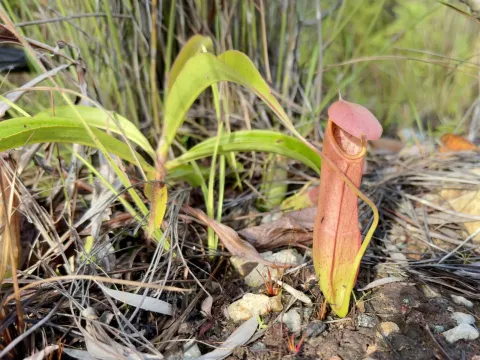
Nepenthes mirabilis
Nepenthes mirabilis
Nepenthes mirabilis is a notable species within the Nepenthaceae family, widely recognized for its diverse pitcher forms. Native to the tropical regions of Southeast Asia and Northern Australia, this plant thrives in warm and humid environments.
What the section contains
Nepenthes mirabilis
The primary growth requirement for this species is a high relative humidity level, typically maintained between 70% and 90%. It is best cultivated in environments such as specialized greenhouses or terrariums to ensure stability.
Light levels must be bright but filtered to protect the plant from leaf scorch. A high-intensity LED light or a greenhouse window with diffused natural light provides the best conditions for photosynthesis and pitcher development.
The substrate must be acidic and nutrient-poor, as the plant obtains nitrogen through prey capture rather than soil minerals. A professional mix consisting of long-fiber sphagnum moss and perlite is generally considered the industry standard.
Water quality is of paramount importance for the health of Nepenthes mirabilis. Only pure water, such as distilled, deionized, or reverse osmosis water, should be used for watering to prevent the accumulation of salts that damage roots.
Pests like spider mites and mealybugs are the most common threats to indoor Nepenthes. They often thrive if the plant is kept in conditions that are too dry or lack proper airflow, necessitating regular inspections of the leaves and pitchers.
Root rot, typically caused by waterlogging, is a frequent issue in cultivation. Ensuring that the pot has sufficient drainage and that the media remains aerated is essential for the long-term vitality of the plant.
Fungal pathogens can colonize the pitcher fluid or leaf tissues if the environment becomes stagnant. Maintaining good ventilation helps to suppress the growth of mold and ensures the plant remains healthy.
Mineral burn is a non-pathogenic condition caused by the use of tap water or improper fertilization. It manifests as blackened leaf tips and the failure of new pitchers to develop, requiring immediate flushing of the substrate with pure water.
In cases of heavy pest infestation, organic-based insecticidal soaps are safer than harsh chemicals. It is always recommended to test any treatment on a small portion of the plant before applying it to the entire surface.