
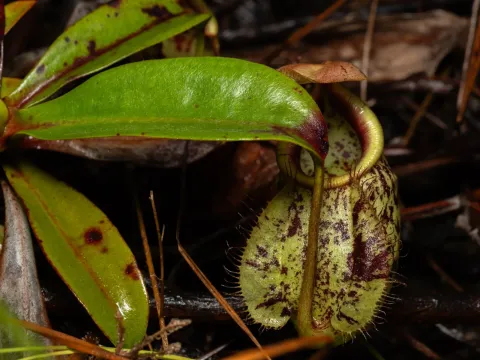
Nepenthes hookeriana
Nepenthes hookeriana
Nepenthes hookeriana is a naturally occurring hybrid carnivorous plant belonging to the Nepenthaceae family, originating from the tropical regions of Borneo and Malaysia. It is highly valued for its large, attractive pitchers that function as specialized traps for insect digestion.
What the section contains
Nepenthes hookeriana
The culture thrives in a tropical environment characterized by consistent temperatures between 22°C and 30°C. Maintaining high humidity, ideally between 70% and 90%, is essential for the healthy development of its signature digestive pitchers and general vigor.
Proper substrate selection is critical for success; the soil must be nutrient-poor, acidic, and well-draining. A mix consisting of live sphagnum moss, perlite, and orchid bark is recommended to mimic its natural epiphytic habitat and ensure adequate aeration.
Lighting requirements involve bright, filtered sunlight. Exposure to direct midday sun can severely scorch the leaves and inhibit pitcher production, so greenhouse shading or artificial LED lighting is often preferred in indoor cultivation setups.
Watering protocols require the use of low-mineral water, such as distilled, reverse osmosis, or rainwater. The plants should be kept consistently moist but never waterlogged, as stagnant water can lead to root suffocation and subsequent decay of the root system.
Mealybugs represent a significant threat to Nepenthes hookeriana, often congregating in leaf axils and on new growth. Manual removal or the application of specialized systemic insecticides in diluted concentrations is recommended for effective control.
Root rot is the most frequent pathological issue caused by poor drainage or the use of heavy, compact soils. Preventing water stagnation by using porous containers and proper drainage layers is the most effective cultural practice to avoid this threat.
Fungal leaf spot diseases can develop in stagnant air environments with excessive humidity and lack of ventilation. Increasing air circulation around the plants helps to keep the foliage dry and suppresses the growth of opportunistic pathogens.
Spider mites can become a problem in settings where humidity levels fall below the recommended thresholds. Monitoring the underside of the leaves and maintaining high ambient moisture levels serves as the primary defense against these pests.
Nutrient toxicity, caused by over-fertilization or high concentrations of minerals in the water, acts as a major stressor. Since the plant derives its nutrition primarily from prey, soil fertilization is generally discouraged and can prove fatal to the plant.